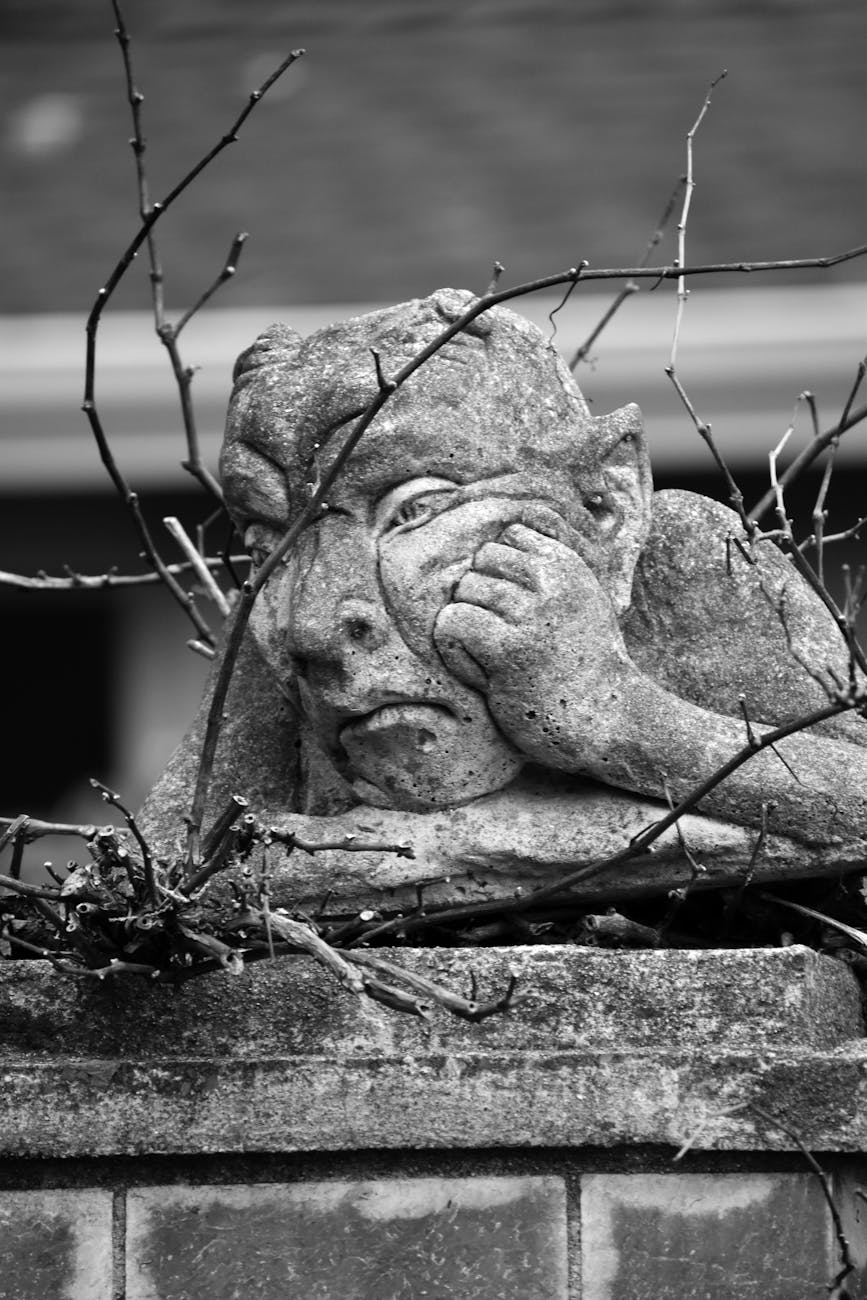
We are, most of us, walking around with a quiet fracture. Something missing. Something we believe can be restored if only we find the right object, the right achievement, the right arrangement of circumstances. The trouble is that the very strategies we use to make ourselves whole often deepen the crack.
Citizen Kane is the classic case study. Charles Foster Kane acquires everything—wealth, art, palaces, influence—only to die alone, whispering “Rosebud” like a man calling into an empty room. For all his possessions, he never possessed what he actually wanted: love. The sled was not valuable. It was a memory of unconditional belonging, the one thing money could not purchase.
Once the unconscious decides that objects can deliver emotional completion, the trap is set. The shopping becomes symbolic. The acquisition becomes therapeutic. And the disappointment becomes inevitable.
I would like to believe I’m immune to this logic. I am not.
I’m not trying to buy love, exactly. What captures me is beauty. A gunmetal sports car. A finely finished watch. Once the image enters my field of vision, it begins to work on me. Beauty has a narcotic quality. It doesn’t argue. It persuades.
When I was nine, my father and I would slow the car to stare at Corvettes and my personal holy object, the Opel GT. We didn’t own them. That hardly mattered. Looking was enough to induce a quiet intoxication.
Some forms of beauty age well. Twenty years ago my wife and I bought a framed Botticelli Primavera from an antique store. It hangs in our living room today. I still find myself studying the figures, pulled into the scene as if it were unfolding in slow motion. The painting asks nothing from me except attention.
Watches work differently.
A beautiful watch does not merely sit on the wall. It demands a relationship. It asks to be worn, justified, integrated into daily life. And here the problem begins.
I’m drawn to intricate designs—chronographs, textured dials, bold contrasts, mechanical drama. These pieces photograph beautifully. They mesmerize under good lighting. They whisper, You are a man of taste.
But then I put them on.
The dial is busy. The legibility suffers. The weight feels wrong. The watch stays in the box.
That’s the gap—the quiet but decisive chasm between aesthetic admiration and lived use. Many of the most beautiful watches I’ve owned became box queens: admired, respected, and essentially abandoned.
A fellow collector once told me he doesn’t mind owning watches he never wears. He thinks of them as wall art. People collect paintings for beauty; he collects watches the same way.
I can’t do that.
Unworn watches don’t calm me. They make me uneasy, like unfinished obligations. A watch that isn’t part of daily life feels less like art and more like a small, expensive mistake.
Years ago, a neighbor let me drive his black Corvette—a childhood Rosebud made real. Within minutes, the spell broke. The cabin was cramped. The ride was harsh. Every bump transmitted directly into my spine. I handed back the keys with relief.
The car looked magnificent. Living with it would have been miserable.
That experience clarified something I’ve come to accept across watches, cars, and most objects of desire:
Beauty alone is not enough.
At some point, every enthusiast discovers a personal boundary—what might be called a Functional Integrity Threshold. It’s the moment when aesthetic appeal loses its authority because the object fails in comfort, usability, or daily harmony.
Below that threshold, beauty is intoxicating.
Beyond it, beauty becomes irrelevant.
Give me both—form and function in alignment—or give me neither. Anything else is just another Rosebud waiting to disappoint.
 Cinemorphosis
Leave a comment