On a good day, my blog draws between 100 and 150 readers. Each post is labored over like a piece of furniture: sanded, polished, adjusted until the grain of my interior life shows through. I wordsmith. I revise. I try to put something honest on the page.
My readers appreciate it.
Then they tell me to make a video.
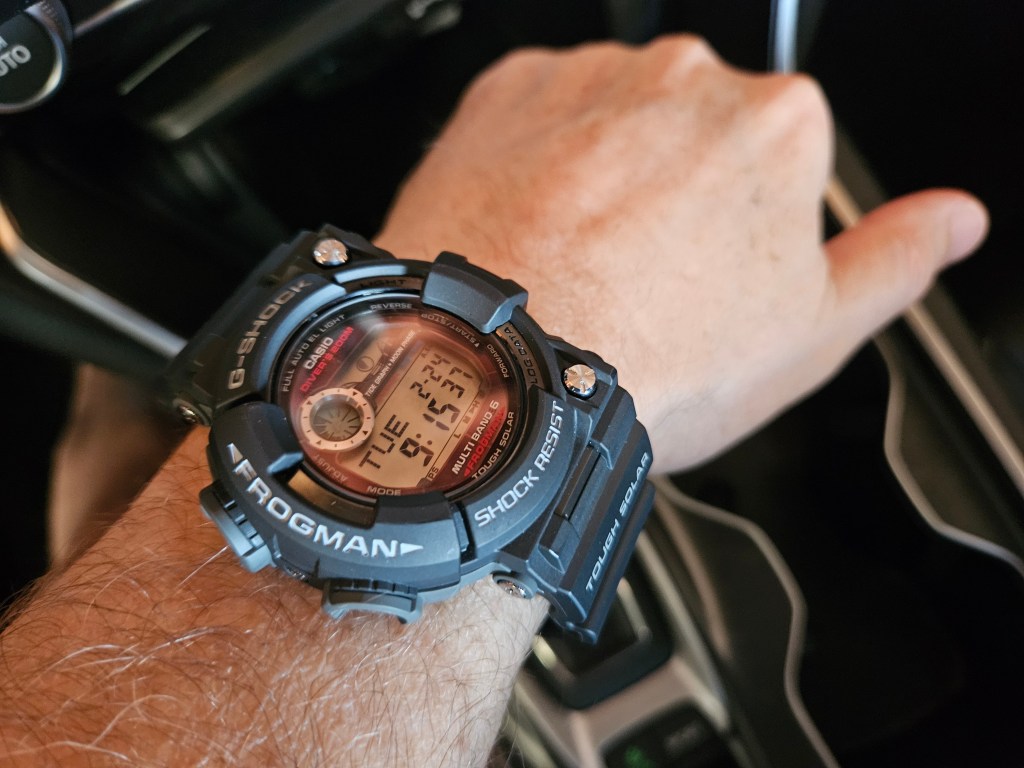
To them, the blog is fine—earnest, thoughtful, respectable. But what they really want is the moving version of me: voice, wrist shots, confession, immediacy. When I wrote about my G-Shock Frogman and its disruptive takeover of my watch life, the post attracted the usual slow trickle—perhaps a hundred readers over the course of a month.
Then I made a video: I Am the Frogman.
I talked about the asymmetrical case, the atomic precision, the way the digital display had pushed my mechanical divers into temporary retirement. I admitted I would probably oscillate between the two worlds, letting digital utility and mechanical romance take turns running my wrist.
Within twenty-four hours, the video crossed 2,000 views.
The message was clear. If I want reach, connection, and conversation, the camera wins. The keyboard, by comparison, is a quiet room at the back of the building.
And yet, the blog stays.
Because the difference between video and writing mirrors the difference between my atomic Frogman and my mechanical divers. One is immediate, energetic, communal. The other is slower, quieter, and inward. Moving between them isn’t a compromise. It’s therapy.
I’ve come to think of this rhythm as Complementary Universe Rotation.
The high-stimulation world—YouTube, comments, rapid feedback—makes the hobby feel alive. People react. They argue. They confess their own obsessions. The tribe gathers. Energy multiplies. A private fascination becomes a shared event, and that shared energy feeds motivation. It reminds me that this strange fixation on timepieces is, at its core, a social language.
But energy comes with a tax.
Too much exposure to opinions, releases, hype cycles, and algorithmic excitement slowly shifts the center of gravity. Comparison creeps in. So does FOMO. Without noticing it, enthusiasm becomes performance. The hobby stops being felt and starts being acted.
That’s when writing rescues me.
The blog is the low-stimulation world. No algorithm urgency. No comment storms. Just a blank page and a stubborn question: Why do I actually care about this watch? Writing forces distance. Distance restores perspective. Editing turns noise into narrative. Instead of reacting to the hobby, I interpret it. The page brings me back to myself.
Moving between these worlds creates a flywheel. Community energy fuels interest. Solitude converts that energy into clarity. That clarity, in turn, makes the next video more grounded, less reactive, less infected by hype. Over time, this rotation produces something rare among collectors: stability. Fewer impulse decisions. Fewer mood swings disguised as strategy. A deeper attachment to the watches that survive the noise.
The rotation also protects pleasure itself.
Constant exposure dulls the senses. Too many releases, too many opinions, too much content—it’s palate fatigue. Writing creates absence. Absence restores appetite. When I return to the high-energy world, the excitement feels earned again rather than manufactured. Each universe cleans up the excess of the other: community drains isolation; solitude drains hype.
This isn’t just a content strategy.
It’s a survival strategy.
Video answers the question: What excites people?
Writing answers the more dangerous question: What actually matters to me?
If I lived only in the video world, I’d drown in noise. If I lived only on the blog, I’d dry out in isolation. But rotating between them keeps the system balanced. The energy flows without overheating. The interest deepens without drifting.
In the end, my watch hobby doesn’t thrive in a single environment.
Like my wrist moving between atomic digital and mechanical romance, it lives best in parallel universes—where the crowd keeps the fire burning, and the quiet keeps it from burning out.
 Cinemorphosis
Leave a comment