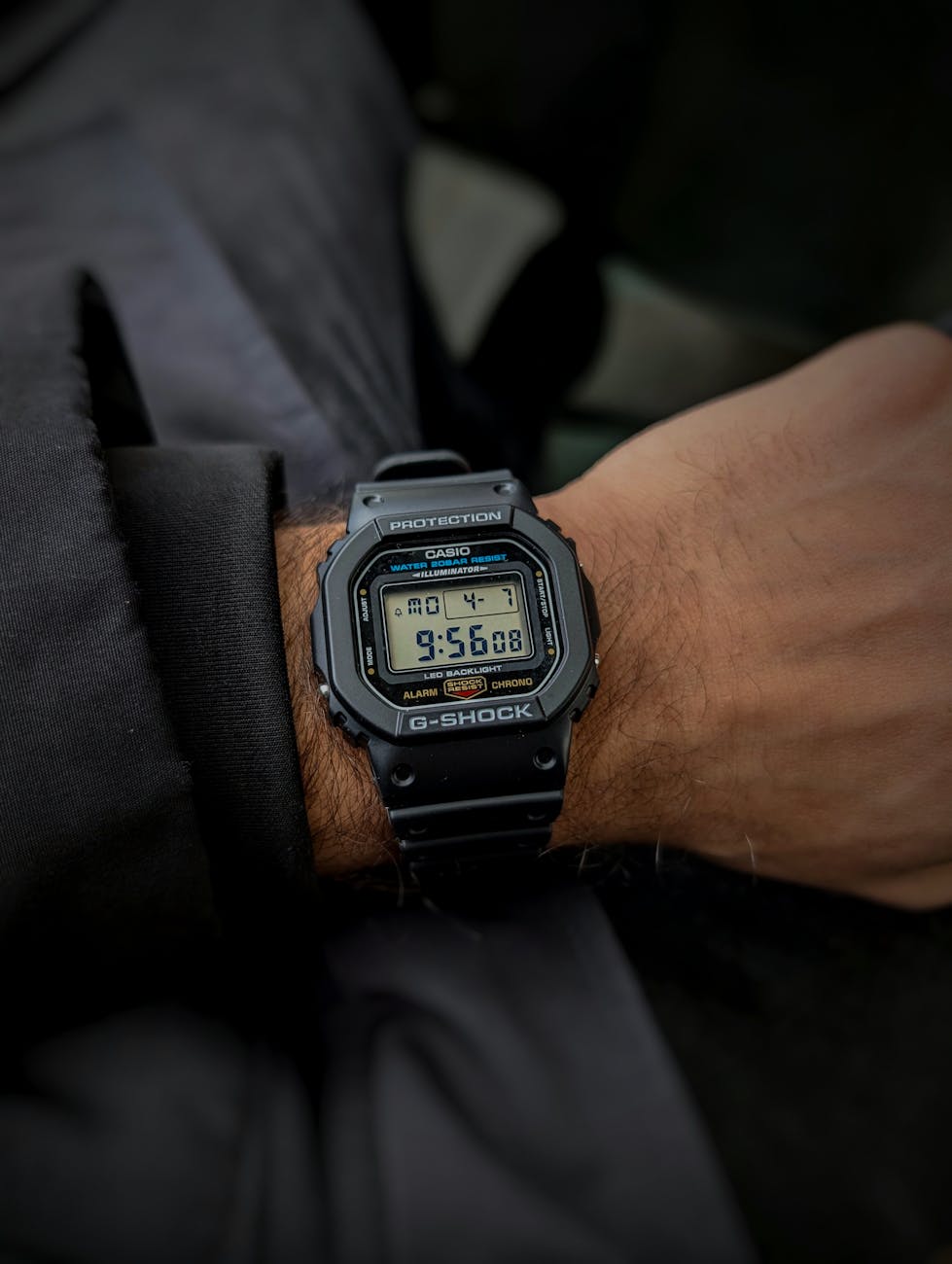
Many of you have written to me about your migration from luxury mechanical watches to G-Shocks. In your telling, it wasn’t a casual shift. It was a renunciation. The grails were sold, the bracelets retired, the safe emptied. The wrist went digital and never looked back.
Your stories are not universal. They are personal, situational, shaped by your own history with status, money, and identity. But taken together, they reveal a pattern worth examining.
The turning point for many of you was a growing discomfort with what your watches had become: power jewelry. The grail that once represented achievement began to feel like a performance—an expensive signal broadcast to strangers. What had felt like success started to feel like theater. The watch no longer told time. It told a story about you, and you were tired of telling it.
That moment marked the beginning of Power Jewelry Rejection.
Power Jewelry Rejection is the instant a collector looks down and realizes he isn’t wearing a tool—he’s wearing a résumé. The rejection isn’t driven by finances or fashion. It comes from fatigue with the performance itself. The grail is sold. In its place comes something blunt, durable, socially invisible. And with that change comes an unexpected sensation: relief. Not the thrill of acquisition, but the quiet authority of no longer needing to explain yourself. This isn’t anti-luxury. It’s anti-broadcast. The real power is wearing a watch that does its job and asks nothing about your status in return.
Once the performance ends, something else appears: a different kind of attachment.
Many of you described a bond with your G-Shocks that never existed with your luxury pieces. Not pride. Not admiration. Something quieter. The watch became a companion rather than a symbol. You wore it hard. You stopped worrying about it. You trusted it. The relationship shifted from ownership to reliance. For the first time, the watch served you instead of representing you.
Interestingly, this conversion produced very little missionary zeal.
There was no urge to persuade others, no need to defend the choice. G-Shock Nation, as you quickly discovered, requires no recruitment. The community is vast, stable, and unconcerned with validation. Evangelism felt unnecessary, even absurd. Confidence made persuasion irrelevant.
But honesty required one more admission.
Yes, you had abandoned the idolatry of luxury. But you had not escaped devotion. You had simply changed altars. The emotional intensity remained—only the object had become more practical, more affordable, less socially conspicuous. The new attachment felt healthier, but it was still an attachment.
And here is where the tone of your stories becomes notable: there was no triumphalism.
You did not claim enlightenment. You did not declare moral victory. You acknowledged the obvious truth: you hadn’t left consumerism. You had changed its form. The new version felt cleaner, quieter, more aligned with your values. Less performance. More use. Less anxiety. More stability.
No revolution. Just a recalibration.
And that may be the most honest outcome the watch hobby ever produces.
 Cinemorphosis
Leave a comment