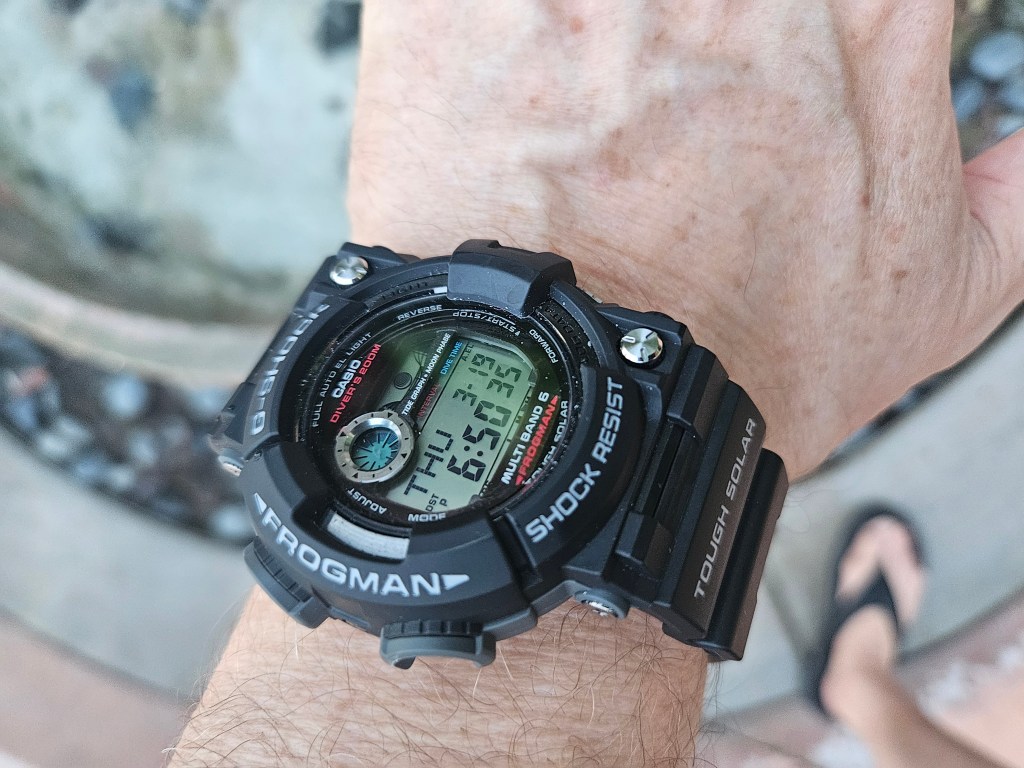
A man in the watch community watched my Frogman video, declared it had caused him “emotional damage,” and proceeded to prove his point by buying Frogman after Frogman in a spree of excess that seemed to be driven more by torment than joy.
The watch hobby already carries enough built-in torment. It doesn’t need to be escalated into a public ritual of compulsion. When I share a video about a watch I enjoy, the aim is simple: appreciation, not contagion. Yet in the attention economy, moderation is invisible. What gets rewarded is escalation—bigger reactions, louder confessions, more dramatic spirals. Attention, after all, is a scarce resource, and the surest way to capture it is to weaponize feeling.
But there is a cost to that performance. When a hobby becomes tethered to the language of “emotional damage,” something has gone wrong. The line between enjoyment and dependency blurs, and what should be a small, contained pleasure metastasizes into something heavier—something that follows you around, nags at you, drains you.
The only countermeasure is deliberate restraint. We have to regulate our intake of the digital world the way we regulate food—set limits, step away, return to the analog. Read a book. Play the piano. Lift something heavy. Walk outside without a device narrating your existence. Relearn what it feels like to occupy your own life without commentary.
If someone discovers the Frogman and it brings them genuine satisfaction, that’s a good outcome. But if it becomes another entry point into a cycle of restless acquisition and theatrical distress, then the watch is no longer the problem—it’s the system surrounding it.
I can’t control what anyone does after watching a video. No one can. The only thing I can do is speak plainly about the effect this environment has on me, and about the boundaries I’ve had to build to keep a hobby from turning into something corrosive. That’s not a solution. It’s a discipline. And it’s ongoing.
 Cinemorphosis
Leave a comment