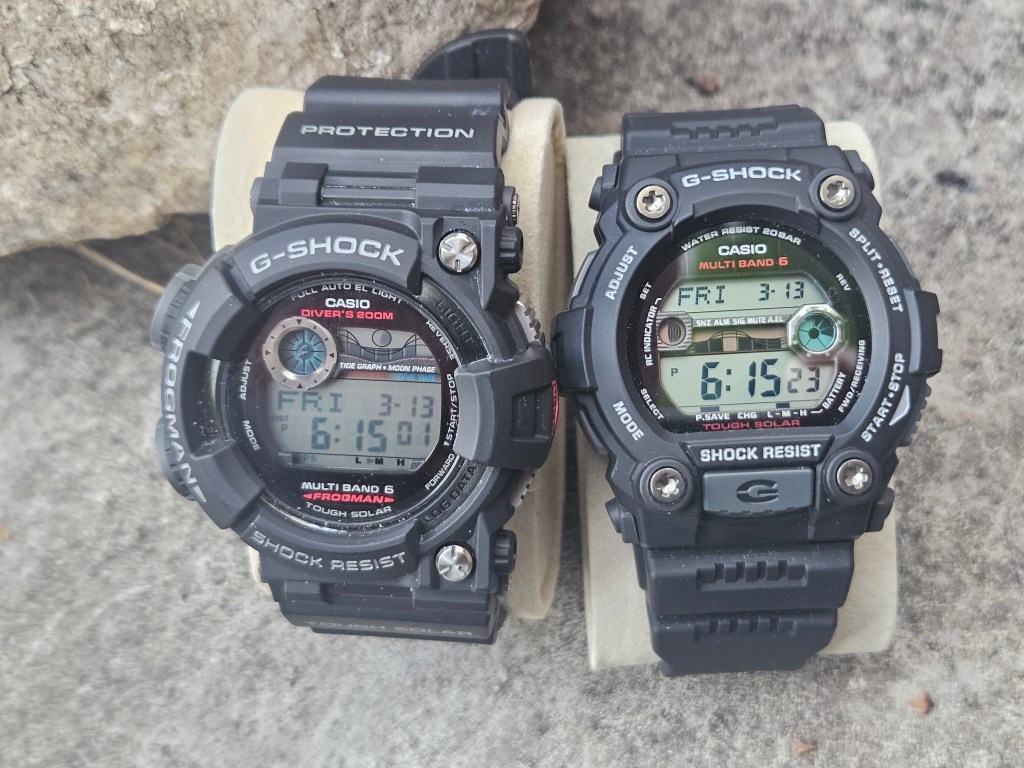
Daniel Samayoa and I met at several watch meet-ups in Long Beach, just outside Mimo’s Jewelry. We quickly discovered a shared fascination not only with watches themselves, but with the strange ways timepieces take hold of the mind. With that in mind, Daniel offers a guest post for my blog Cinemorphosis, examining the psychology of watch addiction and the habits that keep collectors in its grip:
At a certain point, the habit stops being a hobby and starts looking like compulsion dressed up as enthusiasm.
We all like new watches. We also all like taking a good shit. That doesn’t mean you should do it ten times a day and call it a hobby.
The same principle applies to watch collecting. Just because you feel the urge doesn’t mean you need to act on it. That “great value” diver you just discovered—the one you’re convinced is different this time—will likely be worn twice before it disappears into the padded anonymity of your watch box.
And that’s the problem.
You tell yourself you’re building a collection, but what you’re really doing is chasing a small hit of excitement with every purchase. The watch isn’t the point. The transaction is. The anticipation is. The brief illusion of completion is.
Then it fades, and you’re back where you started.
It shows.
Some of you don’t have collections. You have accumulation—watch boxes that resemble clearance racks, full of pieces that once felt essential and now feel optional at best.
Here’s a simple experiment: stop buying watches for a year. Not a month. Not a “cooling-off period.” A full year.
A one-year hiatus isn’t punishment; it’s diagnostic. When you remove the option to buy, you strip away the easiest form of self-distraction and force the habit into the open. The itch doesn’t disappear—it sharpens. You start to notice when it shows up: late at night, after a long day, in those idle gaps where boredom masquerades as curiosity. Without the relief of a purchase, you’re left to examine the mechanism itself—the rationalizations, the urgency, the quiet belief that the next watch will complete something that has never quite been defined. Over time, the noise subsides. What remains is clarity: which watches you actually reach for, what you value in them, and how much of your “collection” was built on impulse rather than need. The hiatus doesn’t take anything away. It reveals what was never there to begin with.
More importantly, you’ll be forced to confront what you actually enjoy wearing. Not what impressed you in a YouTube review. Not what felt like a smart deal. The watches that earn wrist time—the ones that fit your life without effort.
If you own nineteen watches and rotate through four, then you already have your answer. The rest are noise.
The next time the urge hits, pause. Ask a direct question: does this watch have a clear role in my collection, or am I just bored and looking for stimulation?
That question alone will eliminate most purchases.
Then take it one step further: sell what you don’t wear. Not someday. Not when the market is better. Now.
What remains won’t just be smaller—it will be coherent. Intentional. Yours.
Because most people don’t need another watch.
They need restraint.
And a watch box that reflects decisions, not impulses.
 Cinemorphosis
Leave a comment