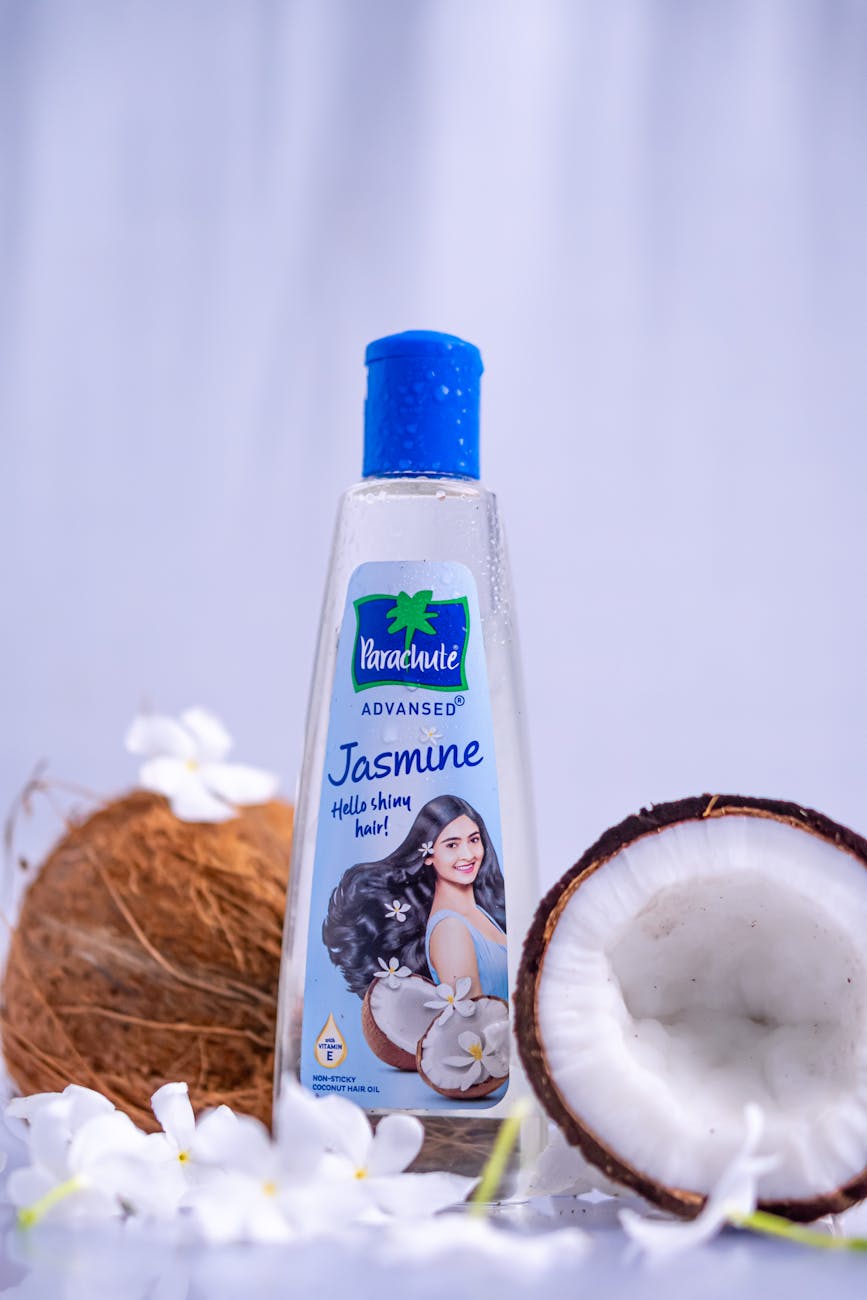
You can’t understand what it meant to be a teenage boy in 1970s California without inhaling the thick, narcotic perfume of banana-coconut tanning oil. It wasn’t a scent so much as a doctrine. You lay on a beach towel the size of a small sailboat and basted yourself in that viscous syrup as if you were preparing your own body for display. No one spoke of melanoma. The goal was simple: darken, gleam, radiate. Bronze was not just a color—it was a declaration of sexual arrival. For a teenage bodybuilder, it was mandatory. Muscles alone were not enough; they needed lacquer, shine, theatrical finish. We weren’t just building bodies—we were curating mythologies.
The culture supplied its own scripture. Xaviera Hollander hovered over the decade like a secular saint of libido, her memoir The Happy Hooker tucked into suburban living rooms beside purple bongs that leaned like exhausted sentinels. Her voice—thick Dutch vowels, half invitation, half sermon—drifted through late-night radio, as intoxicating as the oil we poured over ourselves like maple syrup on pancakes. If Hollander provided the gospel, Eric Weber supplied the tactics. His book, How to Pick Up Girls!, read like a field manual for social siege warfare: pursue, persist, override refusal, wear resistance down to compliance. It was less romance than strategy, less courtship than conquest. And like all bad ideas, it traveled quickly among teenage boys who didn’t yet know the difference between confidence and predation.
At Lake Don Castro in the summer of 1977, we found the living embodiment of this philosophy: Roland Beavers, a thirty-year-old demigod in blue Speedos. He stood on the grassy knoll above the sand like a monument to self-belief—wavy hair, sculpted mustache, gold chain glinting against a chest that looked permanently backlit. A Playboy cooler at his feet, a boombox humming, a Frisbee orbiting his charisma—Roland was less a man than a recurring performance. We studied him like apprentices. His lines never changed.
Every Saturday I heard the following: Roland paid his uncle five hundred dollars for a custom paint job on his Camaro. His father owned expensive real estate in the Bay Area. He had helped manage his father’s properties since he was in high school. He was waiting to hear from a Hollywood studio for a small role as a fighter in a martial arts movie. Even though he never attended college, he had his own house in a desirable part of town called Parsons Estates. Roland would throw in the words “Parsons Estates” as if they were a magical mantra that would make stars sparkle over his coiffed hair.
Every Saturday Roland met a new blonde, somehow more beautiful than the previous one. He and at least one woman would play Frisbee on the grassy knoll above the man-made beach’s imported sand.
On one such afternoon, my bodybuilder buddies and I saw Roland in his usual spot, the grassy knoll, where he was tossing his Frisbee to two blonde girls in white bikinis. I had my towel spread out close by so I could study Roland’s methods. I was half-listening to him talk about how amazing he was and half-reading my parents’ dog-eared copy of The Happy Hooker.
That’s when I heard Roland give out an alarming howl.
“Oh my God,” one of the bikini-clad girls said. “You stepped on a bee.”
I saw the bee spinning in the grass for its final moments before it would die without its stinger.
The bee sting’s effects were immediate. Roland began to sweat and limp while trying to walk through the pain. The two blonde girls looked at the wincing pick-up artist with concern. One of them asked if he was all right.
“No big deal,” he said. “Just a little bee sting.”
“Are you sure you’re okay?” one of the girls asked as the man’s body was covered with a shiny sheen of sweat.
“I’m fine. Really, I am.”
“I think you should sit down,” one of the girls said.
“No, we can still play. I’m fine. Don’t worry about me.”
By now, Roland’s foot had swollen into a giant ham. He looked down at the inflamed flesh, and his tumescent foot was proof of the severity of his situation. His eyes bulged with fear, and then he collapsed, and lying prone on his back he began to hyperventilate.
An ambulance came soon after. Roland was in the throes of anaphylactic shock. The paramedics did their best, but Roland died on the spot.
I was never the same after that incident. I obsessed over Roland’s demise, I suffered nightmares about it, and I stopped going to the beach with my buddies.
About six months after the incident, a peculiar daydream began visiting me with unnerving regularity. In it, I did not watch Roland die from a distance; I inhabited his final moments, seeing the world through his eyes. As his body failed, his mind seemed to step into an alternate life—a gentler, unperformed existence. He was no longer the peacock on the grassy knoll but a husband, walking along the shoreline with his wife, four children orbiting them in laughter, and two rescue dogs bounding through the surf. The air carried a soft, almost cinematic music. The sky was a pale, forgiving blue. Sunlight fell not harshly, but tenderly, as if it had chosen to console rather than expose.
In that imagined reprieve, Roland turned toward something higher—toward God—and spoke with a clarity he had never shown in life. He promised to abandon the theater of conquest, to relinquish the hollow rituals of charm and pursuit, to grow into the man he had postponed becoming. It was as if the world had paused to offer him a final rehearsal for redemption. The horizon opened. A stillness settled over everything. And within that stillness, he seemed to experience, perhaps for the first time, a quiet and unadorned peace—a beauty that required no performance and asked nothing in return.
And just as the possibility of redemption flickered into being—it was extinguished. His body failed. The bee won. His life ended mid-sentence.
I carried that ending with me to the piano, where I tried to make sense of Roland’s death the only way I knew how. For two years I worked on “The Ballad of Roland Beavers,” a piece that refused to resolve cleanly because the life it memorialized never did. Nearly fifty years later, I still play it. The notes haven’t dulled. Neither has the lesson. Some performances end not with a bow, but with a collapse—too little, too late, and no encore.


Leave a comment