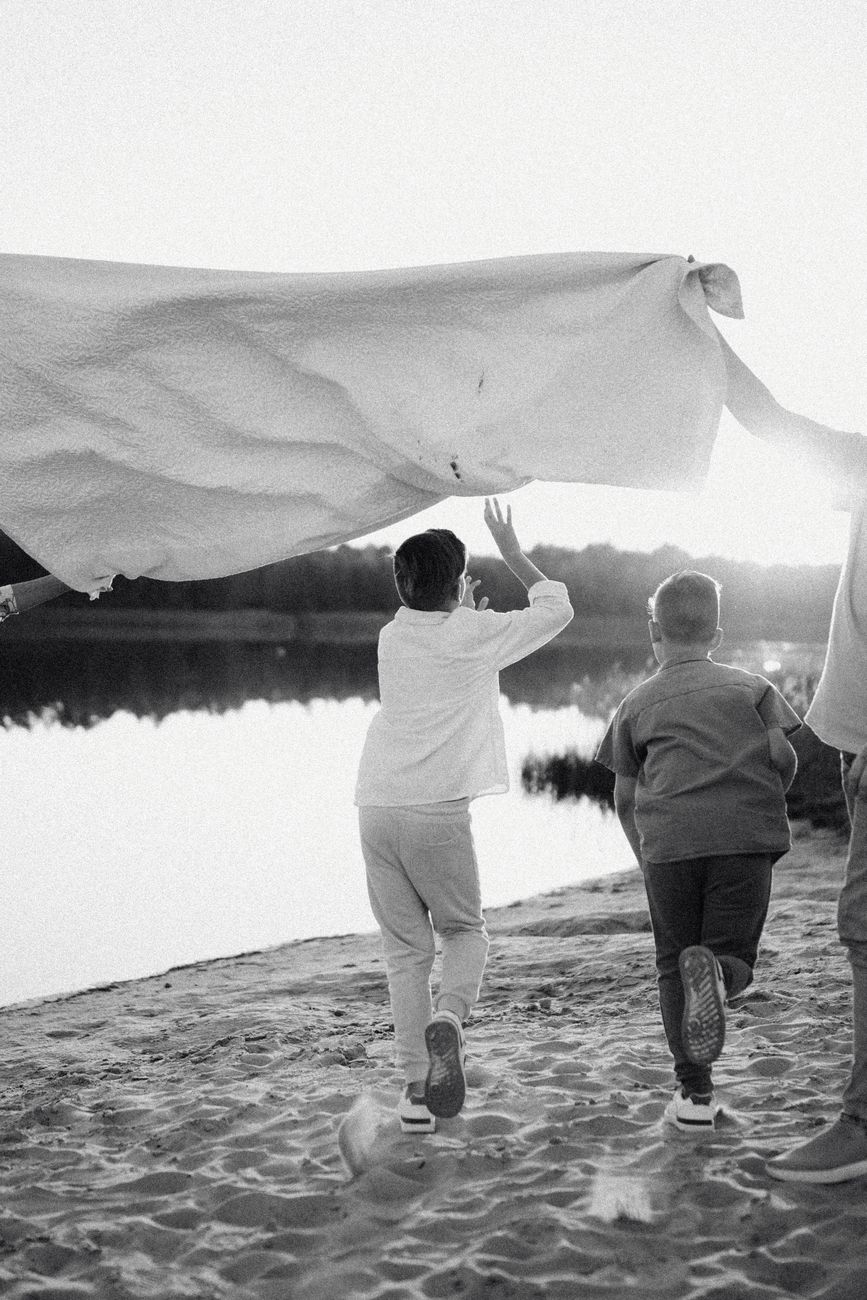
My first great love was not a person.
It was a blanket.
Its official name has long since been forgotten, but I christened it Geekee, a name that made perfect sense to a toddler and none whatsoever to anyone else. Geekee was once white satin. By the time I entered preschool, however, it had evolved into something that looked less like bedding than forensic evidence. It was stained, yellowed, threadbare, and perfumed with an aroma my parents described as “disgusting” and I regarded as the unmistakable scent of home.
Geekee accompanied me everywhere.
At bedtime I rubbed its frayed corners against my cheek or twisted one into my mouth, reenacting the long-forgotten comfort of infancy. Modern psychologists would probably call it a transitional object. I called it civilization.
My parents, unfortunately, belonged to the Anti-Geekee Party.
They insisted I was too old for it.
“It stinks.”
“It looks terrible.”
“People are going to think we can’t afford another blanket.”
They saw a filthy piece of cloth.
I saw emotional life support.
The debate continued until we moved from Florida to California.
Somewhere along a lonely stretch of highway, my father executed one of the cleverest confidence schemes of my childhood.
“Look!” he shouted through the windshield. “A baby alligator!”
Naturally, I turned to the opposite window, searching the roadside for the tiny reptile.
That was all the opening he needed.
With the efficiency of a seasoned CIA operative disposing of classified documents, my father snatched Geekee from my hands, rolled down his window, and launched it into history.
By the time I turned back around, Geekee had vanished.
I was inconsolable.
“Stop the car!” I screamed.
“We have to go back!”
My father remained perfectly calm.
“The wind took it.”
I refused to believe him.
Then he delivered the lie that permanently transformed the story.
“The baby alligator found Geekee.”
I stopped crying.
“He doesn’t have a mother,” my father explained. “He’s cold. He needs your blanket more than you do.”
Children possess a remarkable willingness to believe impossible things, provided those things are morally satisfying.
The image immediately formed in my mind: a lonely baby alligator wrapped snugly inside my beloved blanket somewhere beside the road, warm because of my sacrifice.
My grief did not disappear.
It changed direction.
Instead of mourning what I had lost, I found myself quietly pleased that someone else had gained it.
Looking back, I realize my father had stumbled upon what I now call The Geekee Principle: the recognition that we surrender our deepest childhood attachments most successfully when they are absorbed into a larger story of generosity, purpose, or love. We rarely outgrow comfort by force. We outgrow it by discovering something that matters more than our comfort.
Simply telling me to “grow up” would have failed spectacularly.
Children rarely surrender enchantment because adults lecture them about maturity.
They surrender one enchantment only after being offered another.
My father understood this instinctively.
He did not replace Geekee with logic.
He replaced it with compassion.
Years later, I began noticing that adults possess their own versions of Geekee.
Some clutch prestigious careers long after those careers have become prisons.
Others cling to collections, political identities, social status, religious certainty, resentments, old romances, or carefully curated self-images that have ceased nourishing them years earlier.
The object changes.
The psychology does not.
Every Geekee whispers the same promise:
“Without me, you won’t be safe.”
Sometimes it is true.
Often it is merely familiar.
Growth begins when we discover that the thing we cannot imagine living without may actually be preventing us from becoming the person we were meant to become.
The tragedy is that adults rarely have fathers willing to invent baby alligators for them.
Instead, life performs the theft itself.
A layoff.
A divorce.
A diagnosis.
A death.
A market crash.
The prized possession disappears through the window before we have time to tighten our grip.
Only afterward do we ask whether the loss concealed an unexpected gift.
I never saw Geekee again.
Perhaps it landed in a ditch.
Perhaps another motorist found it and wondered why someone had discarded what appeared to be the world’s saddest dishrag.
Or perhaps, somewhere in the swamps of the Deep South, there once lived an unusually well-insulated baby alligator.
At four years old, I believed that story completely.
At sixty-four, I find myself believing something even stranger.
The best lies are the ones that quietly tell the truth.


Leave a comment