There I was, deep in the weeds of retirement, hacking my way through forms, passwords, security codes, pension calculations, Medicare applications, and all the other administrative vegetation that grows between a working person and his freedom. Retirement was still two semesters away, but I had already learned that you cannot begin preparing for it too early. I had finally obtained what I had come to think of as my revenue-stream number—the monthly pension figure that answered the most fundamental question of retirement planning: Would I be rich? No. Would I be homeless? Also no. This struck me as excellent news.
I called my best friend and colleague, Tom, to tell him.
Tom is seventy-five, a wrestling coach and physical-education instructor, and he has no intention of retiring. For him, leading students through weight training, tennis, pickleball, and wrestling is as natural as breathing. You do not wake up one morning and announce that after careful consideration you have decided to stop respiration. Why, then, would you stop coaching? As long as there are students to train, weights to lift, balls to hit, and wrestlers to instruct in the ancient art of folding another human being into an ottoman, Tom sees no compelling reason to leave.
I told him that my situation was different. My retirement was approaching. In June 2027, at sixty-five years and eight months, I planned to finish my final semester, turn in my grades, close the office door, and walk away.
Tom rejected this immediately.
I couldn’t retire, he told me. I was the only writing instructor teaching the athletes in a face-to-face freshman composition class every fall. The students trusted me. The counselors trusted me. The coaches trusted me. I was loved. I was valued. I was useful. Most important, I was apparently irreplaceable, a status every employee spends forty years secretly craving and then discovers at retirement to be administratively inconvenient.
Tom offered a solution.
“If you retire, I can make sure you still teach that one class. It’ll be easy. You drive to campus one day a week, teach the athletes for two hours, and do the rest online. Everyone loves you—the students, the counselors, the coaches. We can’t lose you. Think about it.”
I did.
At first, I thought it was a wonderful idea.
Why wouldn’t I? The arrangement offered nearly everything flattering about work while eliminating much of what I disliked. I could retire while remaining partially unretired. I could keep the class I loved, work with people who appreciated me, maintain my connection to campus, collect some additional income, and preserve the pleasant fiction that an institution of higher education might collapse if I failed to appear on Tuesday morning.
It was enormously seductive.
But over the next several days, something became clear.
I didn’t want another season.
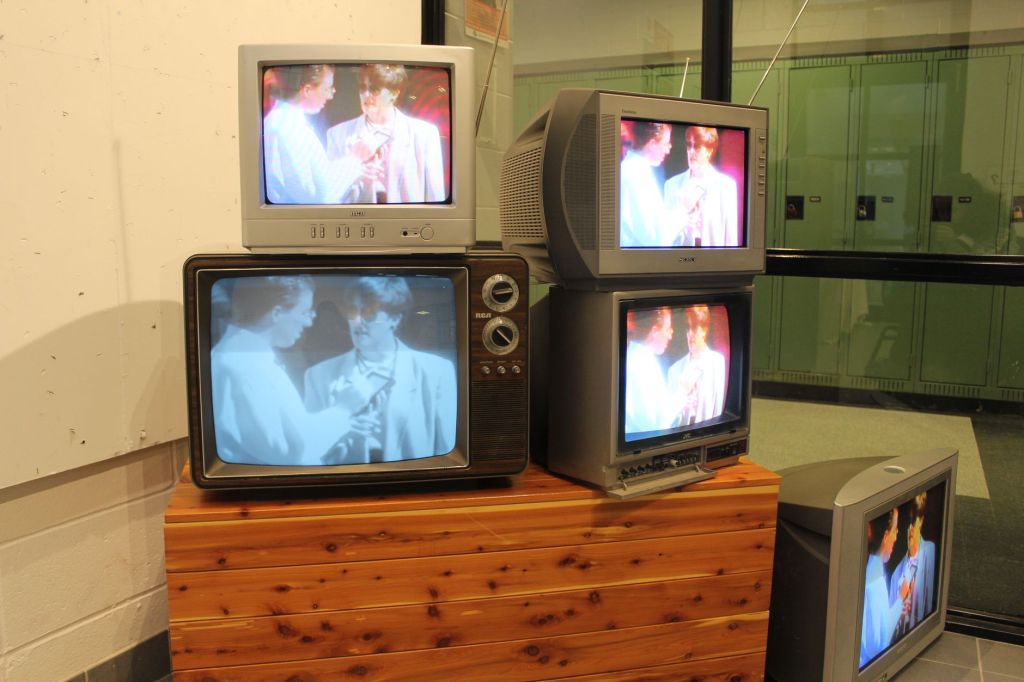
I began thinking about careers the way I think about television series. The best ones know when to stop. Breaking Bad ended. The Sopranos ended. The Wire, The Americans, and Succession ended. Their creators understood something that television networks, aging rock bands, professional athletes, and tenured professors sometimes have difficulty accepting: the existence of an audience does not obligate you to continue performing.
There is dignity in recognizing the endpoint.
Call this the Final-Season Principle: the best time to end a successful career is while the audience still wishes there were another season.
This sounds obvious until someone offers you another season.
Then the ego gets involved.
People still love you. They still laugh at your jokes. Students still tell you that you’re their favorite professor. Coaches tell you nobody can replace you. Counselors want you back. Your friend calls and offers you the professional equivalent of a victory lap: one class, one day a week, two hours on campus. Come on. Just six more episodes.
This is how shows get into trouble.
The great television series end while we are still arguing that they could have continued. The unfortunate ones mistake affection for infinite demand. They survive on reputation, nostalgia, and the emotional capital accumulated during their prime years. Nobody wants to insult them. Viewers speak respectfully about what the show once meant to them. They praise the original cast. They reminisce about the magnificent third season.
They just don’t watch anymore.
A career can end the same way.
I have seen professors remain on campus beyond their natural final season. Nobody tells them. Academia is too polite for that. Colleagues praise their extraordinary service. Former students express affection. Administrators present plaques. Everyone behaves with appropriate reverence.
But something has changed.
The professor is still standing at the front of the classroom, but the performance has lost some electricity. The material hasn’t changed much in years. Grading has become heavier. Preparation feels more burdensome. Technology becomes increasingly irritating. Meetings that were once merely tedious now feel like violations of the Geneva Conventions. The professor may still be perfectly competent, but competence is no longer the issue.
The season has ended.
There can be sadness in watching someone refuse to acknowledge this. After decades of being Professor, Doctor, Coach, Director, or Dean, retirement threatens something more frightening than lost income. It threatens relevance. If students no longer wait outside your office, if colleagues no longer ask your opinion, if your name disappears from the schedule of classes, an unsettling question presents itself: Who am I when the institution no longer needs me?
So you sign up for another semester.
And then another.
You tell yourself the students need you. Perhaps they do. You tell yourself the department needs you. Perhaps it does. But somewhere beneath these noble explanations lurks another possibility: you need them to need you.
That is precisely the ending I want to avoid.
I am not leaving because I dislike my students. I love working with them. I am not leaving because I dislike the coaches and counselors. Their affection makes leaving harder. Nor am I pretending that I am incapable of teaching another composition class. I could do it.
But I can feel the wear.
My cognitive machinery does not turn quite as effortlessly as it once did. Grading feels heavier. Creating fresh material requires more energy. Performing in front of a classroom takes more out of me. And my tolerance for administrative absurdity—particularly the contemplation of Student Learning Outcomes inside the Byzantine catacombs of Nuventive—has declined to levels that may soon require medical intervention.
More important, I want that energy for something else.
Retirement isn’t merely the absence of work. It is the transfer of a finite resource. Every hour I spend grading an essay is an hour I cannot spend reading, writing, exercising, traveling, being with my family, or discovering what life looks like when it is no longer organized around an academic calendar. Energy becomes more precious as you age. Eventually you have to decide where you want to spend it.
And at the moment, I need a considerable portion of mine merely to retire.
There are still Medicare forms to complete, pension systems to coordinate, insurance dates to excavate, passwords to resurrect, documents to locate, appointments to schedule, and websites to enter with the grim concentration of a bomb technician approaching the red wire. I cannot fight the retirement bureaucracy while simultaneously grading freshman essays, creating engaging classroom content, and analyzing Student Learning Outcomes for a website apparently designed by the imperial bureaucracy of Emperor Justinian.
Something has to give.
It will be the job.
So I will call Tom and disappoint him.
I will tell him how much his offer meant to me. I will tell him that being wanted at the end of a career is an extraordinary gift. I will tell him that I love the athletes, the coaches, the counselors, and the peculiar little community we built together. And then I will tell him no.
Because the Final-Season Principle contains a truth that becomes harder to understand precisely when people are begging you to stay: being loved is not a reason to keep working forever. Sometimes being loved is evidence that you have reached the perfect moment to leave.
The show had a good run.
It wasn’t canceled.
I ended it.


Leave a Reply