Tag: life

  • The Love of Radios and the Power of Gezelligheid

    The Love of Radios and the Power of Gezelligheid

    20250226_132117

    The Love of Radios and the Power of Gezelligheid

    I’m fully aware that my love for radios borders on the irrational. When I see a certain type—say, the Tecsun PL-680 or PL-660—something in my brain short-circuits. I’m instantly enchanted, as if I’ve just glimpsed an old friend across a crowded room, and at the same time, I’m comforted, as if that friend just handed me a warm cup of coffee and told me everything was going to be alright.

    A radio isn’t just a device; it’s a symbol, though I haven’t quite worked out of what exactly. Maybe it represents the art of slowing down—of sitting in a quiet room, wrapped in a cocoon of music or in the company of voices so familiar they feel like beloved houseguests. Or maybe it’s something more primal, a sanctuary against the chaos of the world, a frequency through which I can tune out the profane and tune into something sacred.

    The word that comes to mind when I hold a radio is cozy—but not in the kitschy, scented-candle, novelty-mug kind of way. This is deeper than that, more akin to the Dutch word gezelligheid—a term that encompasses coziness, warmth, companionship, and the ineffable comfort of simply being. Radios don’t just play sound; they create atmosphere. They transport me back to Hollywood, Florida, sitting on the porch with my grandfather, the air thick with the scent of an impending tropical storm, the crackle of a ball game playing in the background like a heartbeat of another era.

    Many have abandoned radio for the cold efficiency of streaming devices and smartphones. I tried to do the same for over a decade. I failed. Because gezelligheid—that feeling of simple, enduring pleasure—isn’t something you can replace with an algorithm. Some things, no matter how old-fashioned, still hum with life.

  • A Nostalgic Ode to the Tecsun PL-660

    A Nostalgic Ode to the Tecsun PL-660

    20250123_150400

    Against every shred of common sense I possess, I’ve joined several Tecsun radio forums—a decision akin to a sugar addict moving into Willy Wonka’s Chocolate Factory and sleeping under the chocolate river. It’s not just unwise; it’s a slow, delicious path to ruin. Within minutes, the forum zealots were chanting in unison: “You must own a PL-660 or PL-680! These are relics from the Pre-DSP Glory Era, back when Tecsun radios were free from the infernal chuffing, muting, and choppy tuning that plague DSP models. Think smooth analog cruising versus a hyper-caffeinated, turbocharged sports car.” Naturally, I bit the bait.

    The timing was serendipitous—or dangerous, depending on your perspective. During the height of my radio obsession, circa 2008, I owned a black Tecsun PL-660, and it was the crown jewel of my collection. But, as is the curse of all obsessions, I sold it during a fleeting moment of sanity, a decision that haunted me. When the January 2025 Los Angeles Fires reignited my passion for radios—because what better time to tinker with antennas than during a climate apocalypse?—the one radio I truly mourned was the PL-660.

    Enter eBay, the Pandora’s box of impulse purchases. I tracked down a silver PL-660 from a seller in Canada. At $68, it felt like a steal. Add $30 for shipping, tax, a Tecsun adapter from Anon-Co, and four AA rechargeable batteries, and suddenly my “steal” was a $140 splurge. But what’s money when you’re reuniting with a long-lost love?

    When the silver PL-660 arrived, it was nearly pristine, as if frozen in time. The box, manual, and accessories were all there, minus the adapter. I tested its AM and FM performance and, unsurprisingly, found it nearly indistinguishable from my PL-880—a radio I’d been coddling like a newborn in my bedroom. Sure, the 880’s speaker has a richer timbre, but the 660 holds its own. AM reception? The 660 might edge out the 880, but given the ever-shifting electrical interference in my house, testing it felt like comparing snowflakes in a blizzard. FM? Practically identical.

    And yet, here’s the kicker: I prefer the PL-660. Why? Nostalgia, for starters. It’s been 15 years since I last held one, and its reunion felt like meeting an old friend who hasn’t aged a day. But it’s more than sentimentality. The PL-660 exudes Pre-DSP mystique, wearing its analog pedigree like a hero’s badge of honor. Add to that the rumors swirling on the forums about the PL-680 taking its final lap before extinction, and I developed a textbook case of FOMO.

    Aesthetically, the 660 is a triumph. The PL-880, while a solid performer, looks like it was designed by two committees: one in charge of the radio chassis, the other tasked with slapping on an oversized speaker as an afterthought. In contrast, the PL-660 feels like it was forged from a single, unified block of silver (or black, if you’re lucky enough to find one). It’s monolithic, almost talismanic, with a heft that whispers, “This is not a toy.” Holding it feels like gripping a miniature obelisk of radio perfection.

    PL 880 & Uemura 1

    Naturally, I’m already scheming to buy a second PL-660 or perhaps its sibling, the PL-680, to keep as a “backup”—because if you love a radio enough, redundancy becomes an art form. And, because I can never leave well enough alone, I know I’ll spend the coming weeks obsessively swapping locations, putting the 660 in the bedroom, then the kitchen, then back again, until my brain short-circuits. Who needs stability when you can have perpetual indecision?

    In fact, I barely made it to my office to write this without feeling pangs of longing for the 660, which I’d left momentarily in the kitchen. Thirty minutes apart, and I was already waxing poetic about its brilliance, muttering, “Dude, you really love radios.” And it’s true—I do. Probably too much. But that’s the magic of radios: they’re not just devices; they’re companions, time machines, and portals to a world that feels more tactile and real than anything on your smartphone.

    Do I still love my PL-880? Of course. It’s a marvel of engineering, a steady presence in my life. But the PL-660? That’s my muse, my reminder of why I fell in love with radios in the first place. The 660 isn’t just a radio; it’s a reflection of who I am—an overthinking, signal-chasing, nostalgia-driven mess. And I wouldn’t have it any other way.

  • Sangean PR-D12 Is Solid on FM and AM in the Right Environment

    Sangean PR-D12 Is Solid on FM and AM in the Right Environment

    The following is from my now defunct Herculodge blog. I realized when I did radio testing again in 2025 that RFI (radio frequency interference) is a far greater challenge than it was in 2008. I need to play my radios on batteries, not AC adapters, and keep them away from walls, which is a shame because I really want the Sangean HDR-19, a wall adapter-only radio, which has gone up in price about $80 since even a couple of months ago.

    Since the Los Angeles Fires tore through Southern California in January 2025, I realized my household was embarrassingly underprepared for live news coverage. Streaming devices and smart speakers suddenly felt flimsy when the sky turns orange. I needed something sturdier, more reliable—like a good, old-fashioned radio.

    Enter Sangean, a brand I trusted a decade ago. I fondly remembered their radios delivering a warm, bass-heavy sound—pleasant, if not exactly hi-fi. My ancient PR-D4 still hums along in the garage, proof that Sangean builds workhorses. So, naturally, I picked up their new DSP-chip PR-D12, curious to see how it stacked up against its analog ancestor.

    The verdict? The D12 is brighter and more balanced than the D4, though the warmth I loved has cooled a bit. FM reception is a mixed bag. From Torrance, Pasadena’s 89.3 comes in strong with three bars and crystal clarity on the D12. On the D4? Same signal strength but with a thin veil of static, unless I awkwardly angle the antenna like I’m searching for alien life.

    But then things get weird. 91.5, my go-to classical station, sings smoothly on the D4 but sputters on the D12—two weak bars and static, no matter how I threaten the antenna.

    AM? Forget it. 640 AM is listenable but laced with floor noise on both radios. I twist and turn the radios to align the internal ferrite antennas like I’m cracking a safe, but the noise stays. Worse, AM talk radio voices sound like they’re broadcasting through a burlap sack. Long-term listening? Not a chance.

    What the D12 does have going for it is user-friendliness. Four preset pages with five slots each make navigating stations painless—perfect for my wife, who refuses to wrestle with complex manuals that read like an SAT prep book. She’s happy with 89.3 and 89.9 blasting clear and loud, so the D12 earns its spot in the kitchen.

    Still, I can’t shake the feeling I need something more commanding, like the soon-to-arrive Tecsun PL-990x. Maybe it’ll crack the code on AM audio bliss. Until then, the PR-D12 holds the line—solid, if not inspiring.

    Moderate recommendation.

    Update:

    I told my fellow radio enthusiast friend Gary about how I could not listen to the AM sound on the PR-D12 or my PR-D4, and he expressed the same sentiment. He said the only AM he can listen to from his vast radio collection is his now defunct C.Crane CC Radio-SW, which is a clone of the Redsun RP-2100. This made me sad because many years ago I enjoyed listening to AM on my Redsun RP-2100, but I fried it when I put the wrong AC adapter in it. Getting good AM sound out of a radio is hard these days. 

    Second Update:

    Three days after writing this review, I moved the PR-D12 to the garage where it sounds great on AM so I blame the kitchen, not the PR-D12. 

  • Qodosen DX-286: Purchased Twice, an Update

    Qodosen DX-286: Purchased Twice, an Update

    (originally posted on my Herculodge blog (on the defunct Typepad platform. I’m including an update on this post.)

    The Qodosen DX-286 arrived last Sunday, Day 5 of the Los Angeles Fires, and I wasted no time putting it under the microscope. I scrutinized its build quality, tested its FM and AM performance, and after some thoughtful listening, I decided it was going back.

    To be fair, music sounded pleasant enough on the small mono speaker—soft, inoffensive, like background noise in a coffee shop. But voices? Hollow, thin, and oddly distant. It quickly became clear that this radio would only be tolerable if tethered to a pair of headphones. As for the physical design, the kickstand and battery door felt flimsy, as if one wrong move would snap them clean off. They inspired about as much confidence as a paper umbrella in a hurricane.

    AM reception? Surprisingly solid. FM? Good but not amazing. Despite all the hype about the Qodosen’s so-called super-powerful radio chip, it was no better than the Degen/Kaito 1103 I had over a decade ago. Sure, it effortlessly locked onto 89.3 from Pasadena, but it fumbled with the weaker college station 88.9, struggling like a kid lifting his first dumbbell.

    That’s when it hit me: I was never going to fall in love with this pint-sized radio. It felt like driving a rattling Mazda Miata through a wind tunnel—fun in theory, but exhausting in practice. So, I packed up the Qodosen and sent it back. I don’t blame Qodosen. I blame my unrealistic expectations and my failure to realize I didn’t want a radio this small for my bedroom. 

    In its place? The Tecsun PL-990X. Seven and a half glorious inches of luxury radio, a true cruiser compared to the jittery compact Qodosen. Don’t get me wrong—the DX-286 is a decent radio. I just realized I wanted something bigger, smoother, and built for the long haul. 

    Update:

    I rebought the Qodosen about a month after writing my original Herculodge review. I realized the speaker is excellent, its AM is superior to my Tecsun radios, and that it’s a keeper. One issue: The kickstand broke, so I play it flat on its back.

  • Maybe There’s a Friendship Renaissance Waiting for Retirees, Or Maybe There Isn’t

    Maybe There’s a Friendship Renaissance Waiting for Retirees, Or Maybe There Isn’t

    In a recent conversation with Mike Moynihan on The Moynihan Report, media analyst Doug Rushkoff described social media life as a kind of self-inflicted madness: we willingly lobotomize ourselves into shrill binaries, flattening nuance until the “other side” is little more than a demon enemy. His words echoed Jaron Lanier’s decade-long dirge about how the online hive mind debases us into cheap caricatures.

    After fifteen years inside this funhouse, I can vouch for Rushkoff. Chasing likes and subs is a direct pipeline to despair. The algorithm isn’t designed for truth or connection — it’s a slot machine that spits out dopamine crumbs in exchange for outrage and hype. And yet, podcasters like Rushkoff and Moynihan point to a counterargument: in the right hands, social media can host intelligent conversations. But it’s a fragile victory, like surviving on a vegan diet — possible, but you’ll work twice as hard and swallow twice as much chalk.

    Socially, though, the medium is barren. Scroll long enough and the promise of “connection” curdles into loneliness.

    This hits me harder as retirement creeps closer — twenty-one months and counting. I’ve spent forty years teaching face-to-face, and I’ll miss it desperately. This semester I have student-athletes: sharp, disciplined, driven, engaging. Those classroom connections have been the marrow of my career, and they won’t be replicated by a Facebook feed.

    I’ll still have a family. I’ll still have two best friends in Torrance. But unlike my wife, who maintains a weekly social circuit of concerts, trips, dinners, and parties, my friendships are skeletal. Months-long “friendship fasts” punctuated by rare meetups. Husbands, as the cliché goes, lean too heavily on their wives for connection — a weight she may already feel pressed under. An isolated husband becomes a burden.

    You reap what you sow. Neglect friendships for decades, and you retire into isolation, wondering if you can still course-correct. Maybe it’s too late. Maybe habit calcifies into solitude.

    Or maybe not. Maybe there’s a friendship renaissance waiting out there: gray-haired amateur philosophers huddled at gritty diners, pickleball warriors at dawn, retirees solving the world over coffee. Maybe the beach yoga crowd will embrace me.

    Or maybe that’s just wishcasting. We’ll see.

  • The Sandwich Shop of Eternal Regret

    The Sandwich Shop of Eternal Regret

    Last night, I dreamed I retired too early, lost my tenure, and found myself cobbling together two humiliating jobs to survive. By day I was a part-time writing instructor, hustling between second-rate colleges. By night I was reduced to a takeout delivery boy for the sandwich shop where my wife cheerfully worked.

    If there was a silver lining, it was this: while waiting for her to assign me deliveries, I could pedal furiously on a stable of exercise bikes provided by the restaurant. Because, naturally, this wasn’t just a sandwich joint — it was part health club, part tourist mecca. At one point, a gaggle of Danish tourists descended, cackling in a booth for hours, treating the sandwich shop as though it were the Eiffel Tower of their itinerary.

    My wife flourished. She collaborated with the shop’s original owners, a warm couple from Hong Kong, brainstorming new sandwiches and ambitious upgrades, while I sweated like a condemned man on the bikes. Fortunately, I had a secret weapon: a dark brown leather jacket with supernatural properties. Each time I donned it before a delivery, every bead of sweat, every impurity, vanished as though I’d been baptized anew.

    But there was more. To scrape together a living, I also moonlighted in a third job — mysterious manual labor in a basement with a nameless partner. To reach this purgatory, I rode a bus into the “forbidden city,” a nightmare realm painted in muted oranges, where the architecture sulked in jagged, miserable shapes and its citizens were shackled to endless toil. It was a geometry lesson in despair.

    I was heartsick, regretting my decision to retire early. Only when the bus carried me back to the sandwich shop did relief arrive. There, I could mingle with long-lost friends and international tourists, ride the exercise bikes, and cling to the reassuring thought that my leather jacket would always purge me of sweat and shame.

  • The Lobster That Lifted Kettlebells

    The Lobster That Lifted Kettlebells

    Last night, I slipped into a dream where I was less man and more detective cliché: trench coat, team at my side, the whole noir package. We prowled the tiled underworld of a health club, where women lay dead in the shower stalls. The air carried a rank perfume—pungent, briny, unmistakable. It was the signature of our quarry, The Alligator Man, a serial killer who apparently marinated in fish guts before slaughter.

    Our trap was absurd but effective. We laced another health club’s showers with his own scent, as if baiting him with eau de swamp monster. Sure enough, the predator slithered into the stall, and I lunged. But instead of the hulking brute I expected, I clutched a young, handsome man, small enough to vanish in a crowd. His boyish face said innocent; his stench said otherwise. I locked eyes with him and announced, with grim satisfaction, that he was evil—and that evil was about to rot in a cell forever.

    Then, with dream logic’s usual whiplash, I found myself at a holiday party with my family. My wife had crafted me a lobster costume: claws for hands, a scarlet exoskeleton, and a hat shaped like a boiled crustacean’s head. I looked like a seafood platter at a masquerade ball. I ate cake while dodging feline landmines—the hosts’ cats had redecorated the house with cat mess. The carpet was stained with these “accidents.” With cake fork in hand, I declared this exhibit A for my lifelong “no pets policy.”

    The party oozed past midnight into the pale gray of morning. Bored stiff and craving endorphins, I trudged home. Still zipped inside my lobster suit, I cranked up a kettlebell workout in the living room. My claws clacked as I swung iron, the sweat pooling beneath my polyester shellfish skin.

    Headlights swept across the window. My wife and twin daughters walked in. I assumed they, too, had abandoned the litter-box bacchanal. She spotted me mid-squat, lobster claws snapping, and didn’t so much as flinch. I worried she’d rage over my soaking her handmade costume in salt and sweat. Instead, she simply yawned, brushed past my lobster theatrics, and announced she was going to bed. Evil had been vanquished, cats had soiled carpets, and the lobster workout was apparently just another Tuesday in her world.

  • Typepad, R.I.P.: Obituary for a Dinosaur

    Typepad, R.I.P.: Obituary for a Dinosaur

    In 2006, I wandered into the Wild West of self-publishing and signed up with Typepad. Back then, blogs felt like a revolution: you could pour your obsessions straight into the digital void without begging gatekeepers for approval. I created three: Herculodge, where I indulged my radio fixation; The Breakthrough Writer, course content for my freshman comp class; and The Critical Thinker, the companion for my critical thinking students. Typepad cost me about $150 a year—a fair price for a soapbox in the dawn of the Blog Era.

    But by April 2025, my soapbox had turned into a rickety stool. Typepad was wheezing like a geriatric dinosaur stumbling into an unfamiliar world: constant downtime, glacial load times, the unmistakable stink of neglect. Research confirmed my suspicion—it had been sold, stripped for parts, and left to rot. I canceled my subscription. Out of nostalgia, I kept Herculodge in basic mode, mainly because its archive of radio reviews was still linked to Thomas Witherspoon’s venerable SWLing Post, a site that embodies everything good about radio: community, continuity, and voices across the airwaves.

    But in truth, Herculodge had gone dormant long ago. After the 2025 wildfires in Los Angeles, I went on a spree, bought a dozen radios, reviewed them all, and then, slowly, stopped. The flame flickered, and I moved on.

    Yesterday the official death notice arrived: “We have made the difficult decision to discontinue Typepad, effective September 30, 2025.” Translation: pull the plug, bury the dinosaur.

    This little obituary for Typepad drags me back to the Blog Era, when voices as sharp as Andrew Sullivan’s rose to the level of public intellectuals, while hobbyists like me tinkered in the shadows of niche obsessions, broadcasting to niche audiences. Blogs felt cozy, almost literary: you in a robe, cat on your lap, coffee steaming, ruminating about Virginia Woolf before hitting “publish.” Compare that to today’s Hot Take Era: dopamine-charged combatants spewing rage, preening for likes, and mistaking tribal points for thought.

    The end of Typepad is the end of that quieter world.

    I’ve since migrated to WordPress, which works better, loads faster, and hasn’t collapsed into irrelevance. I have mixed feelings about AI image generators: sometimes they hit the mark, but mostly they’re garish clip art pretending to be art. Still, I pay two hundred bucks a year to carve out a little order from the chaos, and it’s worth every cent. Cheaper than therapy, and with fewer platitudes.

    Typepad’s death isn’t tragic—it’s just the final shovel of dirt on an era already gone.

  • The Influenza of the Mind

    The Influenza of the Mind

    Last week, one of my teen daughters caught a cold. She shrugged it off with the stoicism of a soldier, and I barely noticed she was sick. Then my wife came down with it five days ago. It hit her harder, but she still managed to run errands, wrangle housework, and conquer the Everest of six laundry baskets stuffed with clothes that needed folding.

    Then there was me. Yesterday, after my afternoon nap, I felt aches and pains and immediately began writing my obituary. Sprawling out on the couch in the living room, I put on the docuseries The Kingdom on ESPN but had to close my eyes, then take another nap because I was “so unwell.” 

    Convinced I was succumbing to something sinister, I staggered into the kitchen and cooked dinner. The salmon, broccoli, and rice all came out overcooked—not because I was incapacitated, but because I was deep into Internet articles about PFAS “forever chemicals.” Nothing like a side of toxic paranoia with your charred protein.

    My family tolerated the burnt offering, attributing it to my alleged illness. But once I slumped onto the couch after dinner to watch Below Deck, I went full opera tenor: sighs, groans, complaints, the whole libretto of impending doom. My family, unimpressed, mocked me. “Illness always makes me morbid and lugubrious,” I explained, as if quoting from a Victorian diary.

    My daughters laughed. My wife rolled her eyes: “Here we go. The man flu.” I thought about citing research suggesting men actually suffer more with the flu, but even I knew I’d already overshared.

    “Maybe you’re just tired,” my wife said. “Maybe you shouldn’t work out tomorrow.”

    I declared that one missed workout would cause my muscles to shrivel like neglected houseplants. “I’m doomed,” I muttered, then retreated to bed before nine like a bereft invalid.

    This morning, I awoke braced for catastrophe—a full-blown cold, a fever, the Grim Reaper at my door. Instead, I felt…fine. Perfectly fine. My wife and daughter had been right. I wasn’t sick. I was just tired.

    The truth is, when I sense illness creeping in, I go from zero to tragic opera in seconds. I suffer from Influenza of the Mind, a performance illness that turns me into a paranoid man-baby. Last night’s theatrics were not the noble struggle of a fading patriarch, but the wailings of a melodramatic hypochondriac in need of nothing more than eight hours of sleep.

  • No Age Is for Cowards: Worry as Full-Time Employment

    No Age Is for Cowards: Worry as Full-Time Employment

    When I was six, my Grandma Mildred came to visit us at the Royal Lanai apartments in San Jose. This was around 1967. Like any neurotic little kid, I peppered her with endless questions about an upcoming event. Most of them revolved around food: what would we eat, would there be enough, and what if the deviled eggs ran out? Eventually, Grandma sighed and told me, “You worry too much.”

    Really? Another thing to worry about? Thanks, Grandma. Now I could add “chronic worrying” to my list of anxieties. Would it turn me into a puddle like the Wicked Witch? Would I self-destruct under the sheer weight of my own nerves?

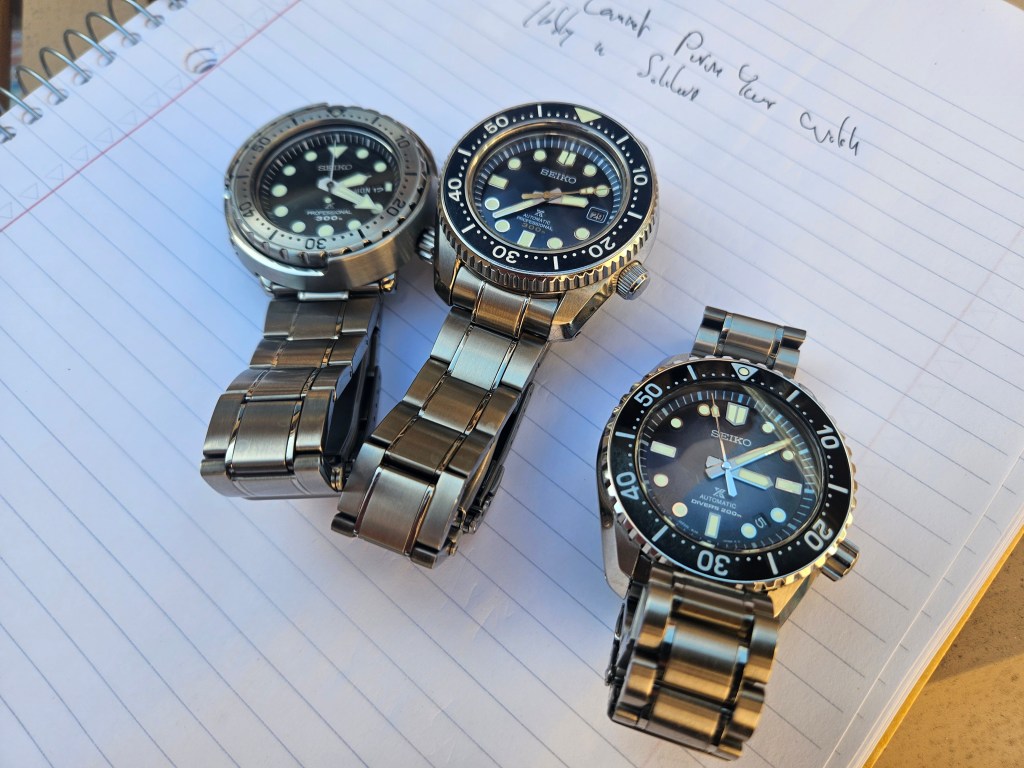
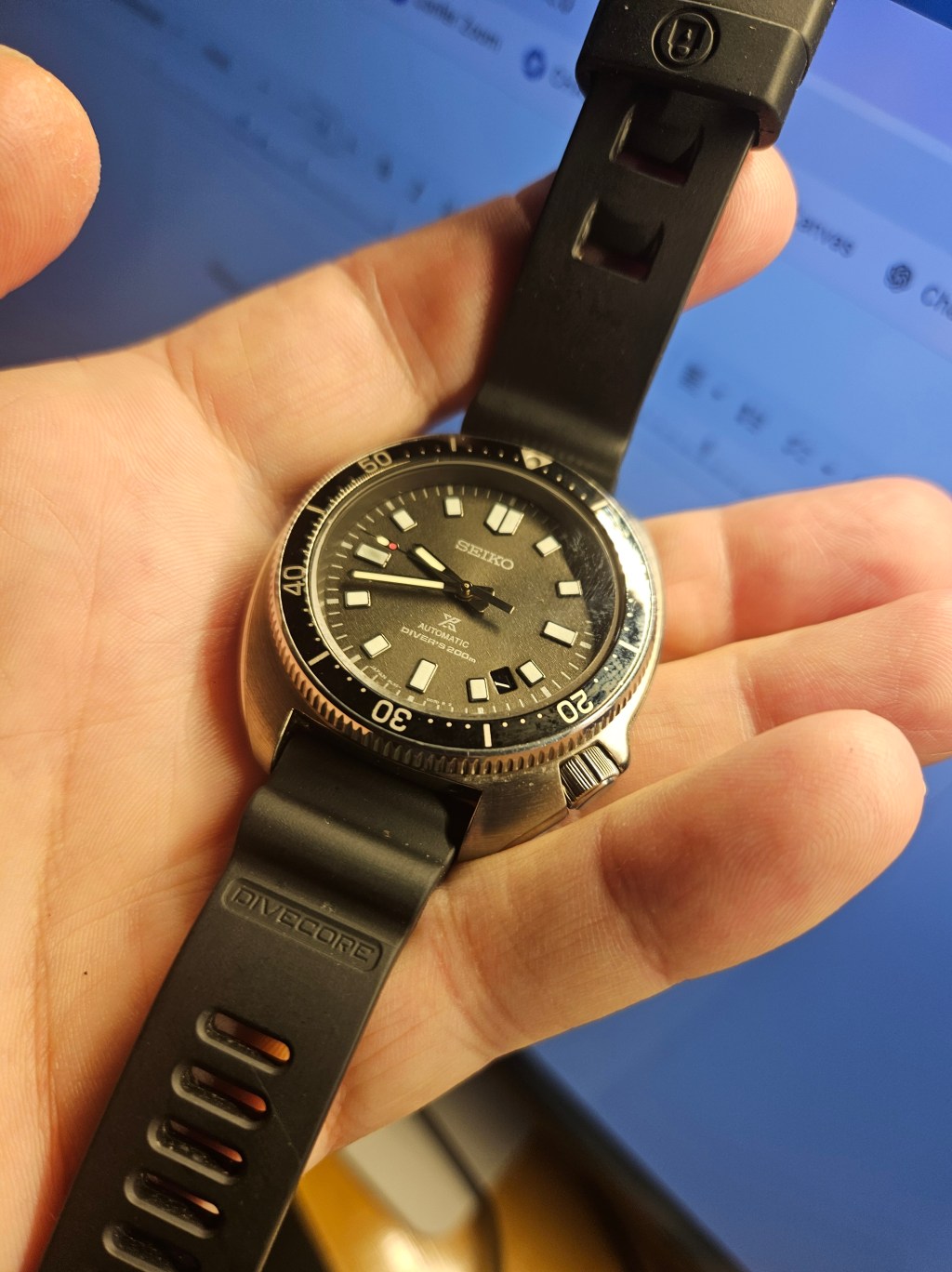
    Flash forward fifty-eight years. Spoiler: I still worry like a professional. My bandwidth jams up with the dumbest obsessions—like finding the right rubber strap for my Seiko diver. I’ll lose sleep and dive so deep into Internet rabbit holes you’d think I was chasing doctorates in linguistics and ophthalmological physics simultaneously.

    Food isn’t any easier. Reading How Adam Smith Can Change Your Life, I encountered Hillel’s famous line: “If I am not for myself, who will be for me? If I am only for myself, who am I?” Roberts added that anyone who would sacrifice millions of lives to save a finger is “a monster of inhuman proportions.” Cue existential panic: If I chow down on Greek yogurt and whey protein while ignoring the industrial torture of animals, what kind of person does that make me?

    That question dredged up a memory. Years ago, while doing valet duty at my twins’ school, I chatted with Lucianna, a Brazilian parent. She told me about growing up on her uncle’s dairy farm, where calves were torn from their mothers so humans could have their milk. She remembered the calves wailing all night, a sound so haunting she’s sworn off dairy for life. Her story still rings in my ears.

    So here I am, designing my new plant-based meal plan: buckwheat groats, tofu, tempeh, nut butter, soy milk, a stack of supplements, and protein powder. I’m ready to begin. But, of course, my inner worry machine kicks in:

    • What about my omnivore family? My tofu will feel like an accusation on their dinner table.
    • What about my friends and relatives? I’ll be dismissed as a moral buzzkill, banished to the Lonely Dungeon.
    • What about vacations? Hunting for vegan options in Miami or Oahu will turn relaxation into reconnaissance.
    • What about protein and Omega-3s? My muscles will wither, my brain will curdle, and I’ll be left a vegan husk.
    • What about cheating? What if, in a moment of weakness, I scrape a lemon-pepper shrimp into my mouth while clearing plates? Then I’ll hate myself, because I’ll have violated both my morals and my macros.

    And so the worrying goes. Yet maybe this is the point. Doing the right thing rarely comes gift-wrapped in comfort. It comes with sweat, tension, and plenty of struggle.

    My grandfather once told me when he was eighty and drowning in doctor visits: “Old age is not for cowards.” I’ll amend that. No age is for cowards. Living—really living—means confronting fears, fighting cowardice, and resisting the bondage of compulsive worrying. And if anyone has the secret sauce for escaping this mental hamster wheel, I’m all ears.