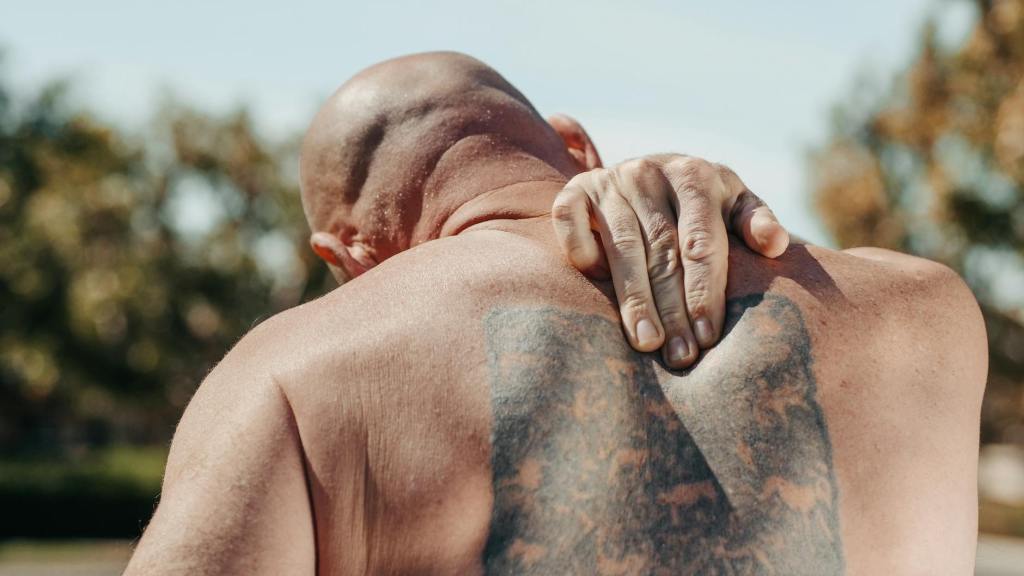
Five months into a rotator cuff injury, my left shoulder now runs a morning protest movement. Today it was particularly militant. The arthritis pain was so loud it drowned out my writing, which is saying something, because writing is usually where I go to escape pain, not negotiate with it.
The solution, as usual, was humility. I picked up light dumbbells and did slow lateral raises—nothing heroic, nothing Instagram-worthy. Just enough movement to get blood into the joint and remind it that we are still partners, not enemies. The pain eased. Ibuprofen helped too, but I’ve learned the hard lesson: skip it for a day, let the inflammation throw a party, and it takes hours to evict the guests.
Rotator cuff arthritis is a mechanical problem disguised as a moral one. When the joint isn’t tracking well, the socket gets irritated, and the irritation becomes inflammation. Night makes it worse. While you sleep, the synovial fluid thickens into something closer to cold syrup. Morning arrives, and the shoulder feels like a rusty hinge. The cure is movement—gentle, persistent, unglamorous movement. Every time I loosen it up, the joint forgives me a little.
Training now looks less like conquest and more like diplomacy. Two kettlebell sessions a week, mostly lower body, with some shrugs and narrow-stance knee push-ups—just enough upper-body work to maintain function without provoking rebellion. Power yoga is back three days a week, a return to the early-2000s era of Bryan Kest and Rodney Yee, now supplemented by the Man Flow Yoga channel. I modify poses for the shoulder, but once I settle into the rhythm, the familiar state returns—the quiet, steady current of yoga flow. At this point, the mental repair may be more important than the physical.
The Schwinn Airdyne—the Misery Machine—has been demoted to one day a week. Left unchecked, I turn cardio into a courtroom, constantly trying to beat yesterday’s calorie output. Competition with yourself sounds noble until it becomes another form of anxiety.
Underneath all of this sits the larger ambition: weight loss through appetite discipline. Easier declared than achieved. Two nights ago I dreamed I wanted to be lean again but could only get there through GLP-1 drugs (which I’ve never taken). Such a dream is what your subconscious imagines when it has lost faith in your willpower. I’m hovering around 230—solid in a T-shirt, but without the narrower waist that signals to the world (and to my lab results) that discipline has the upper hand. For me, that line is about 210.
Physical self-improvement is rarely about aesthetics alone. It’s an attempt to become the kind of person who can choose the long-term over the immediate—the kind of person who doesn’t negotiate with every craving. Discipline isn’t punishment. It’s the architecture of a calmer life.
This question of belief came back to me while watching the documentary Queen of Chess, about Judit Polgar, who fought her way through a male-dominated chess world. Her advice was simple: you have to believe in yourself. The line landed harder than expected.
But belief doesn’t arrive on command. If your history includes abandoned goals and broken dietary programs, confidence isn’t a mindset—it’s a construction project. It’s built the only way durable things are built: small wins, repeated often enough that the brain stops arguing.
Rome wasn’t built in a day. Neither is a shoulder. Neither is a waist. Neither is a self you trust.
 Cinemorphosis
Leave a comment