For the past week my appetite has surged like a rogue wave. That could mean several things, none of them particularly flattering. Perhaps I’m medicating stress with food. Perhaps there are subterranean stress triggers rumbling beneath the surface that I haven’t identified yet. Life, after all, provides a constant background hum of anxiety, and it’s difficult to distinguish ordinary daily strain from something more corrosive.
Retirement is hovering in the distance like a financial fog bank. I’ve been emailing HR about the price of keeping my Kaiser coverage after I retire versus moving to my wife’s more modest plan. Her school pays less than mine, which means we’re staring at something in the neighborhood of $1,500 a month once dental and vision enter the scene. Retirement, which is supposed to represent liberation, suddenly looks like a complicated negotiation with spreadsheets, identity, and self-worth. And apparently my body’s response to this existential accounting exercise is simple: eat more chicken.
There is, at present, a dangerous quantity of takeout chicken in this house. Fried chicken. Roasted chicken. Greasy, seductive chicken lounging in the refrigerator like a gang of edible hoodlums. I open the fridge intending to take a small, respectable bite. Five minutes later I’m standing there gnawing through a drumstick like a raccoon that has discovered civilization. The aftermath is predictable: gluttony followed immediately by anxiety.
The anxiety, unfortunately, does not arrive alone. It brings a surveillance drone. I watch myself overeating as if my consciousness has sprouted a third eye hovering above the scene like a judgmental security camera. I am both the criminal and the detective. The more I watch myself eat, the more anxious I become. The more anxious I become, the more I eat. I have achieved what behavioral psychologists might politely call a closed loop of misery.
Action is required.
My proposed solution is radical in its simplicity: three meals a day, no snacking. Breakfast will be steel-cut oatmeal or buckwheat groats fortified with protein powder. Lunch will be rolled oats with yogurt and more protein powder. Dinner will consist of a sensible portion of protein, vegetables, and an apple. It is not glamorous, but glamour is precisely the problem.
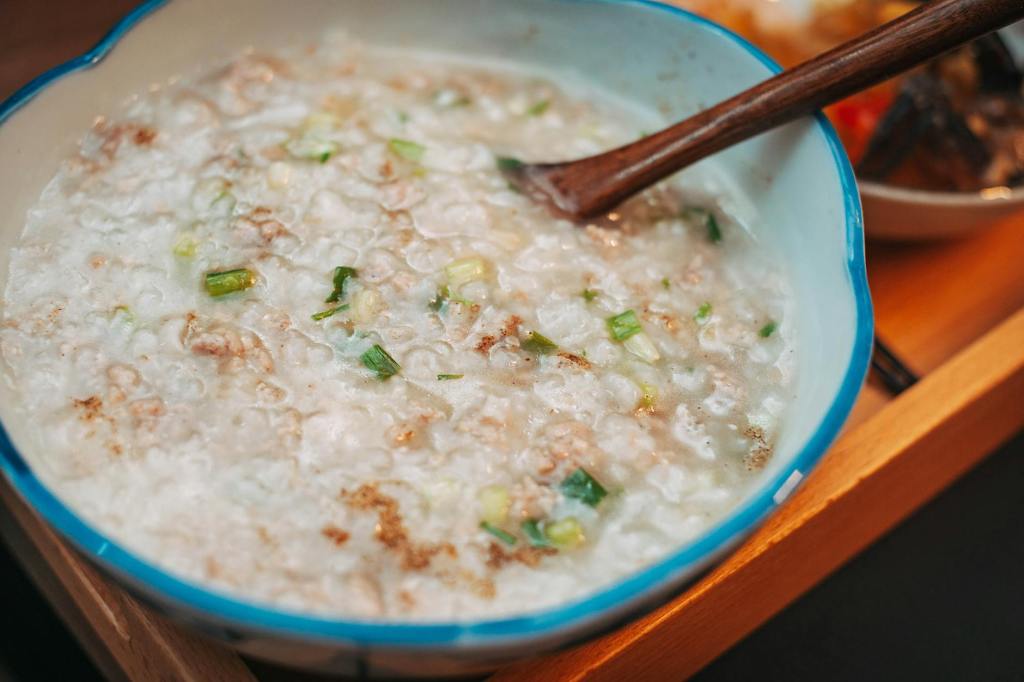
Oatmeal comforts me. It possesses the mild, reassuring neutrality of something that has no ambitions beyond keeping you alive. Perhaps it is a kind of surrogate baby food. Perhaps the approach of retirement has triggered a mild regression in which my brain seeks the emotional equivalent of warm porridge and a quiet afternoon nap. As I drift deeper into my mid-sixties, it is entirely possible that my culinary philosophy is reverting to something suitable for a kindly monastery.
Life is uncertain. Porridge is not.
I like the predictability of three meals a day involving some form of oatmeal. I like the idea of owning a Lenovo ThinkPad, which is the oatmeal of computers. I like the Honda Accord and Toyota Camry, which are the oatmeal of the automobile world. And I like my solar atomic G-Shocks, which are the oatmeal of timepieces—durable, accurate, incapable of drama.
If possible, I would like to swim inside a large industrial vat of oatmeal, floating peacefully while the chaos of the modern world clangs harmlessly against the outside of the tank.
Unfortunately, hostile forces surround the vat.
My daughters campaign relentlessly for takeout: Dave’s Hot Chicken, Wingstop, Panda Express. Holiday gatherings appear with enough pies and brownies to launch a regional bakery franchise. A man can only resist these temptations for so long before the walls of discipline begin to buckle.
Meanwhile, medical costs continue their relentless ascent, and retirement funds tremble nervously as global markets perform their daily interpretive dance of geopolitical uncertainty.
Under such circumstances I find myself clinging to a personal doctrine I’ve begun to call The Porridge Principle: the instinct to confront anxiety by retreating into humble, reliable technologies and routines that promise frictionless predictability. Oatmeal breakfasts. ThinkPad laptops. Honda sedans. Solar atomic watches. These objects do not thrill, but they do not betray.
When the world becomes chaotic, the mind begins searching for tools and rituals that behave exactly the same way every day.
So that is the plan.
Trader Joe’s opens in an hour. I will buy groceries for my family and a heroic supply of oatmeal. The campaign against uncertainty has begun.
Pray for me.

 Cinemorphosis
Leave a comment