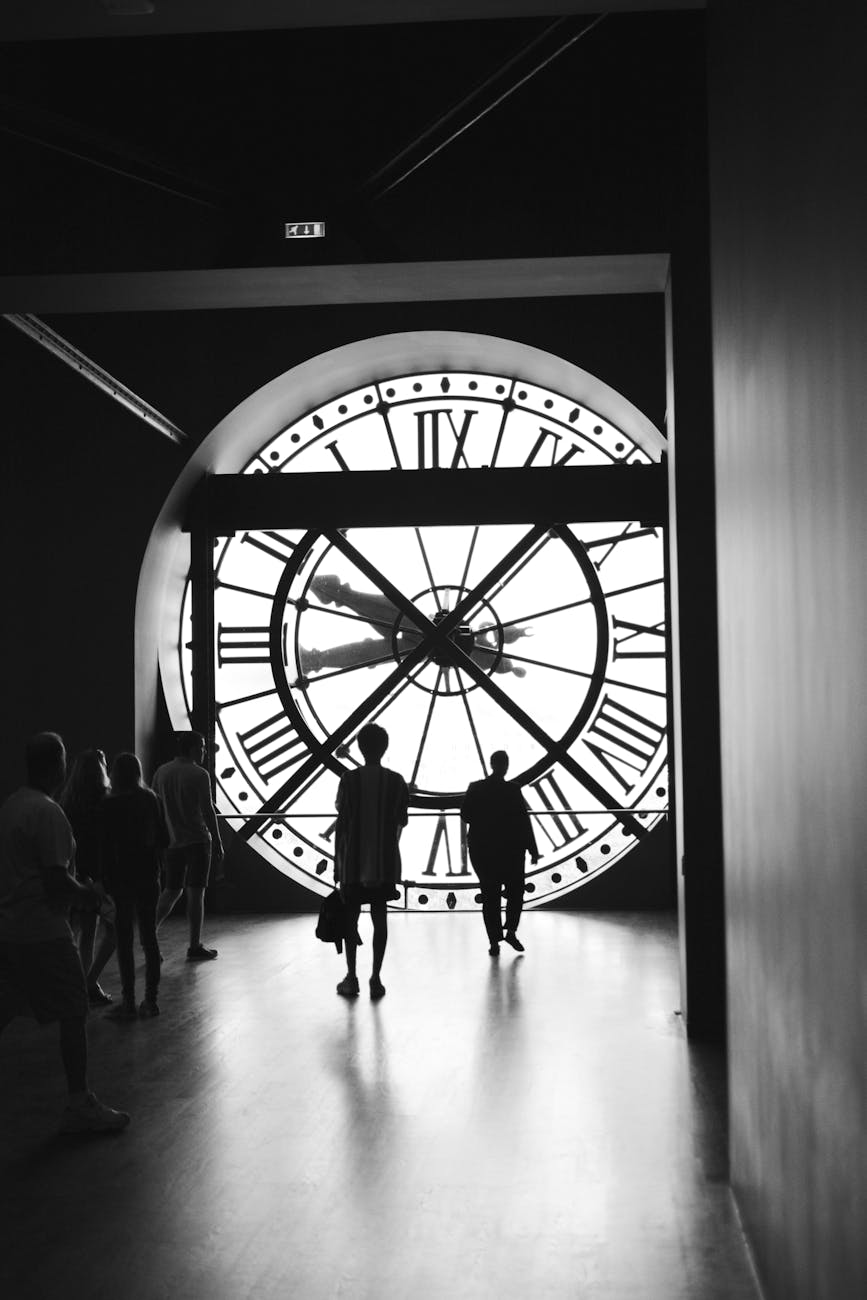
You can still read, technically. The eyes move. The words register. But something essential has thinned out. Years inside the chronophage—the great time-eating machine—have rewired the circuitry. You no longer take in ideas; you absorb fragments. You skim life the way you skim a feed. You prefer voices at 1.25 speed, ideas pre-chewed, narratives delivered in twelve-minute installments with thumbnails that promise revelation and deliver stimulation.
You know what it is. The Internet is not a library—it’s a galactic food court, a neon sprawl of drive-through kiosks serving intellectual fast food. Ninety-nine percent of it is forgettable at best, corrosive at worst. You try to manage your intake. You play the piano. You lift weights. You show up for your family. You perform the rituals of a grounded life. But the residue remains. The machine has had its way with you.
And then comes the quieter poison: self-pity. No one reads anymore, you tell yourself. Everyone is grazing from the same algorithmic trough. You feel stranded, a refugee from a literate past. You invoke the phrase “post-literate society” not as analysis but as lament. And yet, the only reason you can even diagnose the condition is because you remember something else—an earlier version of attention, slower, deeper, less contaminated. You carry that memory like a fading photograph and call it protection.
You came across a word last week: chronophage—a system that feeds on your time while convincing you it is nourishing you. It fits too well. The system is not broken; it is functioning perfectly. Its purpose is to consume time, and it does so with industrial efficiency. In the attention economy, attention is not honored—it is harvested. Your mind is not engaged; it is extracted from. There is no mercy in this design. The only consolation is a thin, uneasy solidarity: your mind is not uniquely damaged. It is simply part of a mass casualty you are lucid enough to witness.
 Cinemorphosis
Leave a comment