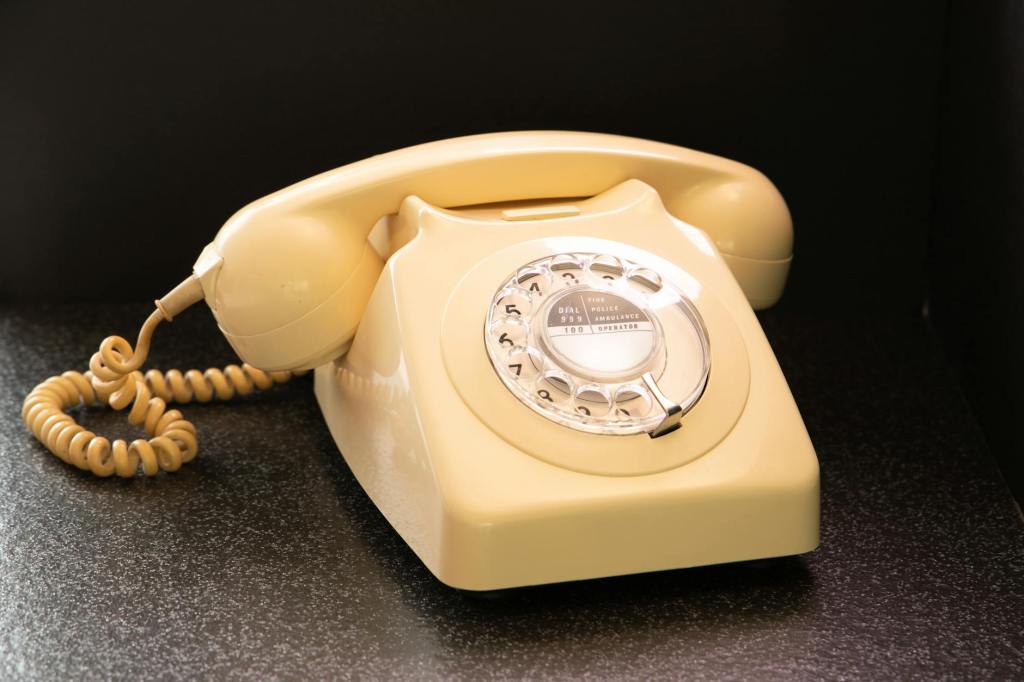
I remember the Landline Era with a kind of reverence that borders on disbelief. Back then, I inhabited a different self. Those heavy rotary phones were not appliances; they were portals. You dialed into a world where connection had weight, where conversations stretched for hours until your ear burned raw against the receiver. When the phone rang, it didn’t interrupt life—it elevated it. The call carried you from ordinary time into something charged and consequential. Someone wanted you. Someone chose you. That alone conferred meaning.
Even the timing of a call had its own grammar. A phone ringing before dawn meant dread. I was eleven on December 31, 1972, when my best friend Marc Warren called early to deliver news that felt too large for our age: Our beloved baseball hero Roberto Clemente had died in a plane crash while bringing aid to earthquake victims in Nicaragua. The call itself became part of the tragedy—a ritual of shared shock, proof that grief demanded a witness.
In my late twenties, after I moved from the Bay Area to the California desert for my first full-time teaching job, the phone remained a lifeline. Friends scattered across Denver, Eureka, and back home would call, or I would call them, and we would talk—really talk—for two hours or more. We told stories not just to report events but to interpret them, to make sense of who we were becoming. The underlying message was never spoken, yet it saturated everything: you matter enough for this kind of time. Your life deserves this level of attention. I never questioned my worth because it was constantly affirmed in the currency of sustained conversation.
By the early 2000s, the erosion had begun. Calls shrank to thirty minutes, sometimes less. You could feel the shift before you could name it. Texting arrived first, then the slow takeover of online life—relationships diluted into fragments, attention splintered across endless digital surfaces. The word “engagement” was repurposed into something thin and transactional. It came to mean clicks, likes, metrics—fleeting signals that mimicked connection without ever achieving it. No surge of digital attention could rival the steady gravity of a two-hour conversation in which your existence was never in doubt.
In what I think of as the Parasocial Era, self-worth became unstable, tied to numbers that refreshed by the second. Real relationships receded as people adapted to simulations of connection. You watched others contort themselves to stay visible—posting constantly, performing outrage, dispensing optimism like a drug, chasing relevance as if it were oxygen. It was easy to recognize the pathology in others and harder to admit its presence in yourself. That recognition, uncomfortable as it was, pushed me to step back from social media, though not entirely free of its pull.
Around 2006, I started a blog about my obsession with radios. It wasn’t really about radios. It was about reaching out, about recreating some version of the connection I had lost. When I joined social media a few years later, I found myself tracking engagement numbers with a vigilance that bordered on compulsion. Each fluctuation felt like a verdict. For the first time, I didn’t take my self-worth for granted; I monitored it, measured it, doubted it.
Meanwhile, the practical demands of life closed in. Raising twin daughters, managing time, keeping everything afloat—these became the organizing principles of my days. Friendships didn’t end so much as they withered. Meeting someone in person required planning, travel, coordination—all the friction that digital life had taught me to avoid. Plans were made and then canceled. Illness intervened. Weeks turned into years. Absence became normal.
I understand now that these simulated connections cannot supply what they promise. They offer stimulation, not sustenance. They mimic affirmation but cannot anchor it. I wish I had protected a handful of friendships with more stubbornness, more intention. Not out of nostalgia, but out of necessity—for myself, and for the people closest to me. A man with real friendships is a steadier presence at home. Deprive him of those, and something essential erodes.
I don’t pretend there’s a way back to the Landline Era. I don’t see myself as a casualty either. I made choices. I accepted the bargain of convenience and efficiency, believing I could preserve deep connection while embracing frictionless substitutes. I believed I could have my cake and eat it too. That belief was naïve. The system was designed to flatter that illusion.
Still, I return to that Sunday morning in 1972. A tragedy had occurred, and my friend needed to tell me—not broadcast it, not post it, not signal it to a crowd, but tell me. Because I mattered. The call was the message.
 Cinemorphosis
Leave a comment