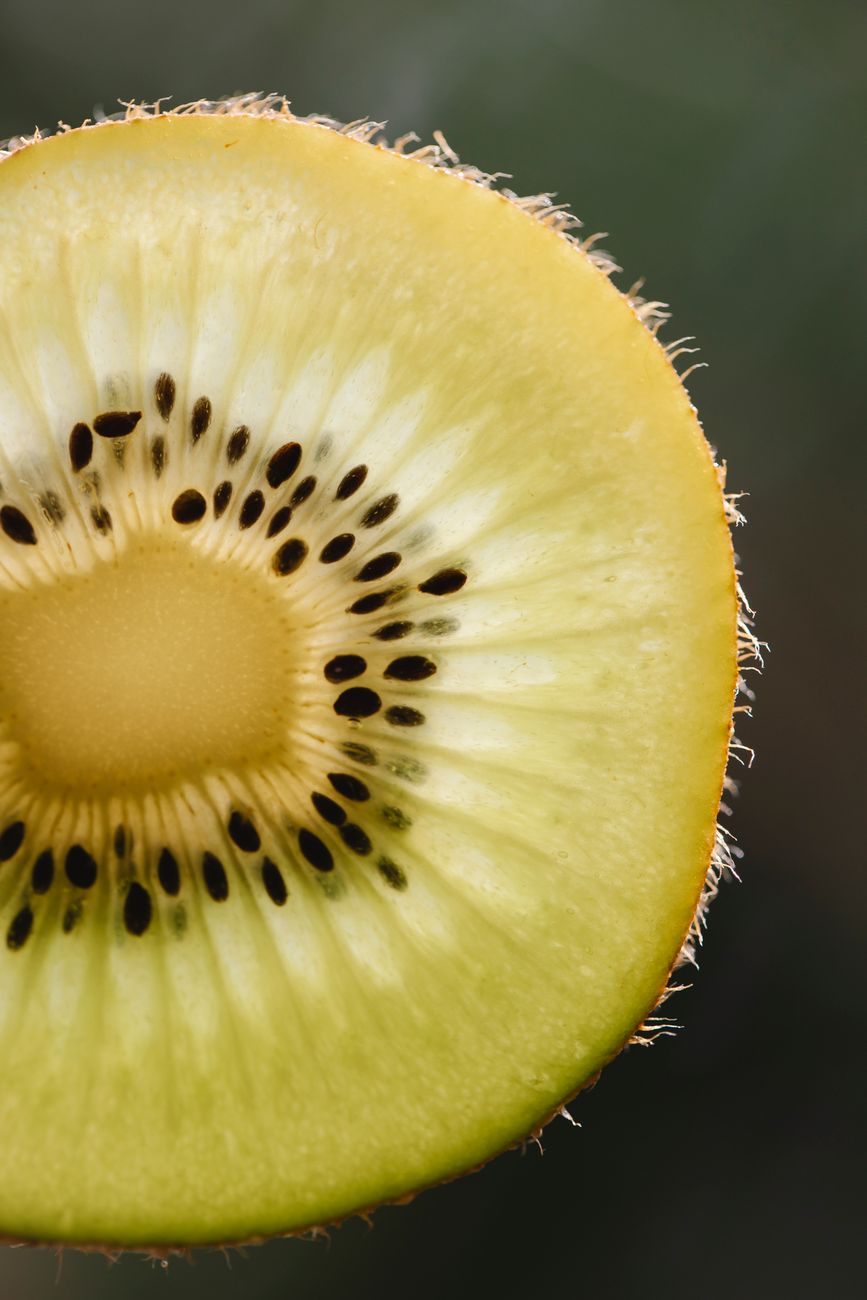
Around seven this evening, I found myself in Target performing the small rituals of domestic survival. I drifted first to produce, where I stood contemplating six-packs of kiwis—those fuzzy, unglamorous orbs that look like they were designed by a committee that feared both beauty and commitment.
To my left stood a blonde woman in black athletic tights, late thirties, hair cinched back by a black headband. Her eyes were ringed with the faint bruising of fatigue or life—or both. When she saw me reach for the kiwis, her face brightened with the sudden, evangelical urgency of someone who has found a truth and is no longer capable of keeping it to herself.
“Have you ever bought the golden ones?”
I nodded, already sensing the sermon.
“I love those because you can eat the skin.”
“I can do without the skin,” I said, hoping to signal that my relationship with fruit had boundaries.
She leaned in, undeterred. “Don’t skip that part. That’s where you’re getting all your antioxidants, folate, vitamin E, and fiber.”
She delivered this litany with the confidence of someone who had recently completed a deep dive into the internet’s temple of wellness influencers and emerged fluent in their catechism.
“I’m a true believer in the kiwi,” I said, offering a diplomatic half-truth in the hopes of ending the exchange.
It did not end the exchange.
She urged me to seek out the golden kiwis and to consume them whole, skin and all, as though salvation itself depended on my willingness to chew through fuzz. I smiled, nodded, and executed a tactical retreat.
She struck me as a fundamentally decent person, but I recognized the type. I’ve met her before in various incarnations: the recently converted, the self-reinvented, the earnest disciple of a new regimen. Somewhere in her recent past, there had likely been a fracture—addiction, heartbreak, loneliness—and now she clung to nutrition and fitness as both shield and scripture. Her enthusiasm, admirable in theory, had outrun her social calibration.
Five minutes later, we encountered each other again in the granola aisle, approaching from opposite directions like two diplomats from uneasy nations. Our carts collided in that narrow space, and she immediately yielded.
“You can go first.”
The earlier fervor had drained from her. In its place was a kind of tentative humility, as though she had replayed the kiwi lecture in her mind and found it excessive. She seemed smaller now, slightly folded into herself, her previous confidence replaced by a quiet, almost visible self-consciousness.
I sensed embarrassment, perhaps even shame—not because she had said anything offensive, but because she had revealed too much of herself too quickly. Now she was attempting restraint, but the adjustment hadn’t taken. The performance read not as composed but as deflated.
The poor woman was unraveling in real time, her emotional weather shifting faster than she could dress for it.
“No worries,” I said, and moved past her.
Later, at home, I found myself thinking about her with sympathy. I know that impulse—the sudden surge of enthusiasm that spills over onto strangers, the desire to connect that arrives without a proper governor. I’ve been that person, pressing too hard, talking too much, revealing too quickly, only to retreat later into a private audit of one’s own excess.
If I ever find myself eating golden kiwis, skin and all, I suspect I’ll pause for a moment and offer a small, private prayer for her—for whatever she’s trying to fix, and for the courage it takes to try fixing it in public.


Leave a comment