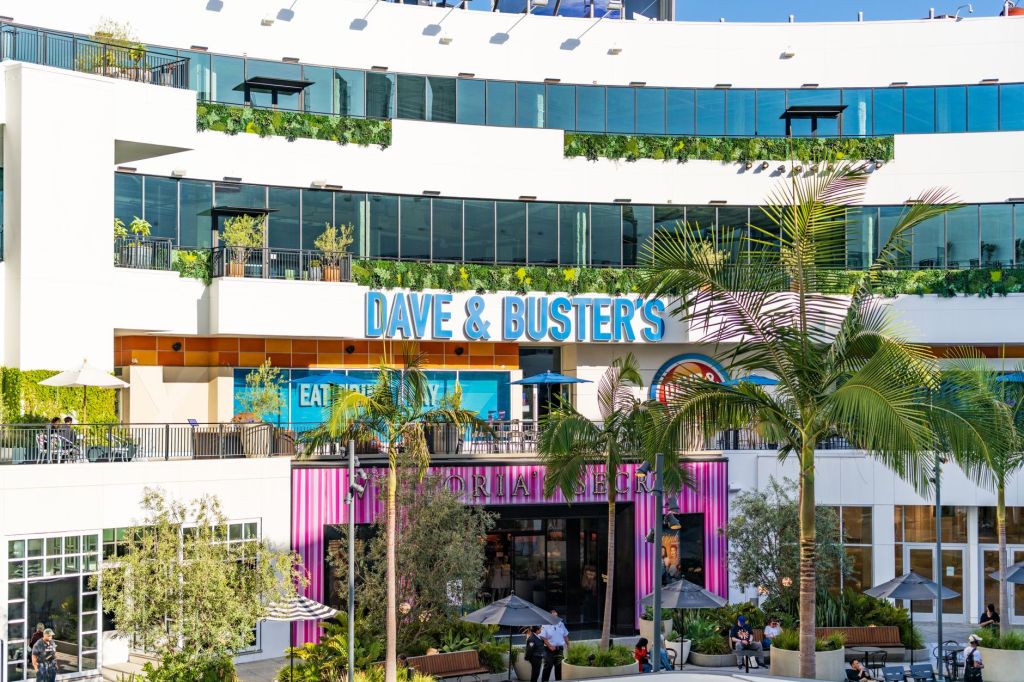
On our way to a vacation in Carlsbad, we made an unplanned pilgrimage to the Irvine Spectrum. A retailer had forgotten to remove one of those magnetic security tags—the kind that doesn’t merely protect merchandise but threatens to baptize it in indelible dye should you attempt to liberate it yourself.
It was ninety degrees outside, yet the mall overflowed with shoppers who looked as though they had wandered out of a lifestyle advertisement. Most appeared to be under twenty-one, gliding effortlessly through the promenade in athletic shorts, yoga pants, or denim cutoffs so abbreviated they seemed engaged in an argument with modesty. They possessed that enviable firmness exclusive to youth: muscles earned not through discipline but through adolescence itself. Nature had done all the work, leaving many of them with the faintly irritating confidence of people who mistake a genetic inheritance for a personal achievement.
The boys wore that ubiquitous haircut that resembles broccoli sprouting from their skulls: luxuriant tufts piled high above sides clipped so close they looked apologetic. Somewhere a barber had convinced an entire generation that vegetables belonged on the human head.
The older men were no less committed to the performance. Many looked to be in their forties, dressed in expensive athletic wear that existed less for exercise than for exhibition. Their fitted shirts advertised sculpted shoulders, bulging biceps, and veins that appeared to have negotiated sponsorship deals with their forearms. Aviator sunglasses completed the ensemble. They looked as though they had stepped directly from an Outdoor Voices or Vuori photo shoot, each one silently auditioning to become the patron saint of functional leisure.
Then there was me.
I was too old for the mall, too heavy for the uniform, and wearing exactly the wrong shirt: a T-shirt emblazoned with Snoopy and the words World Champion Dad.
At that moment, I did not feel like a champion of anything.
While my wife and daughters disappeared into the stores to rectify the retailer’s oversight, I settled into the shade beside a fountain and watched humanity file past.
What struck me first was not the clothing itself but its uncanny uniformity. Nearly everyone seemed assembled from the same inventory. Their shirts, shoes, sunglasses, handbags, water bottles, and watches appeared to have been harvested from neighboring storefronts. Like hermit crabs constructing protective shells from whatever debris washes onto the ocean floor, these shoppers had fashioned exoskeletons from the flotsam and jetsam of consumer culture.
But the clothing was only the outer shell.
The deeper transformation had taken place beneath the fabric.
These people had absorbed the mall’s emotional atmosphere as thoroughly as they had absorbed its fashions. They radiated the mall’s synthetic optimism, its perpetual cheerfulness, its frictionless sentimentality, and its promise that fulfillment was perpetually one purchase away. Every storefront preached the same gospel: happiness is available in your size, and it’s twenty percent off this weekend.
Deism proposes that the Creator reveals Himself through nature.
Mallism proposes something else entirely.
It teaches that the faithful gradually become expressions of the mall itself. Its architecture colonizes their imagination. Its values become their values. Its aesthetics become their personality. They cease merely to shop there; they begin to embody the place.
The mall, in other words, manufactures not only consumers but a recognizable species of human being.
Watching the procession from my shaded bench, I wondered whether I had stumbled into a habitat rather than a marketplace—a carefully engineered ecosystem in which identity, aspiration, and self-worth circulated through the air-conditioning along with the scent of cinnamon rolls and expensive perfume.
Perhaps every civilization eventually constructs temples.
Ours simply installed escalators.


Leave a Reply