In 1974, when I was in junior high, a friend came to school looking wrecked. He had spent the weekend at his family’s cabin skiing at Bear Valley Mountain Resort, and when he returned home Sunday night, exhausted from two days on the slopes, he couldn’t sleep.
This made no sense to me.
Wasn’t exhaustion supposed to produce sleep? You depleted the body, crawled into bed, and disappeared for ten hours. That was the arrangement.
His mother, a nurse, offered a different explanation. Her son had gone beyond ordinary fatigue. He was so exhausted that his body could no longer relax enough to sleep.
I found the idea fascinating and horrible.
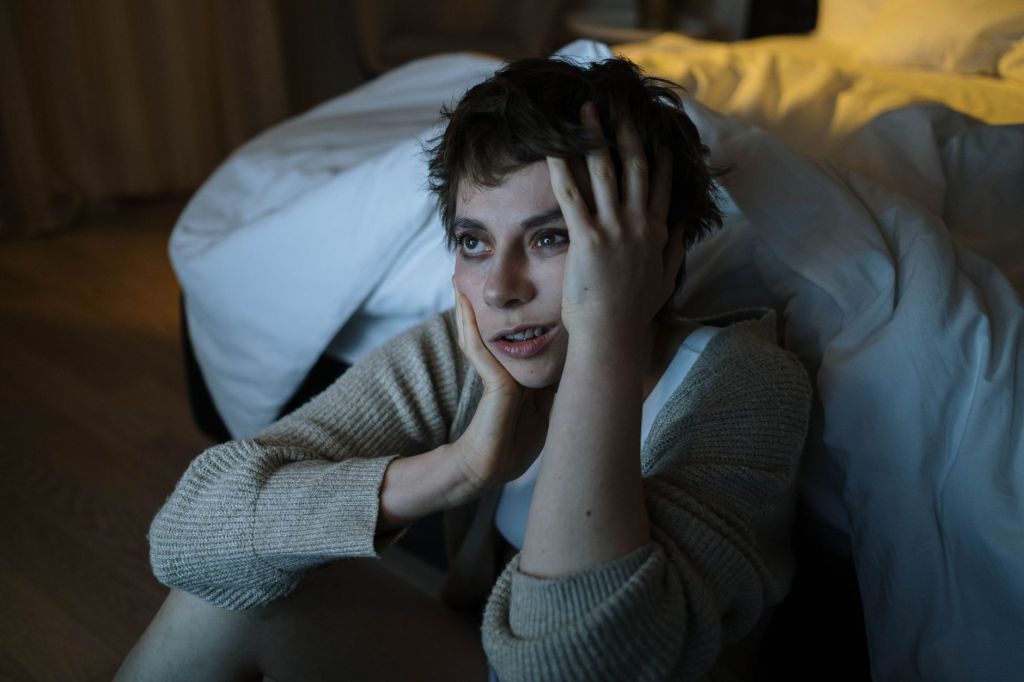
Call it The Exhaustion Paradox: the state in which fatigue becomes so acute that instead of producing relaxation and sleep, it produces agitation, anxiety, and an inability to rest. The body desperately needs the very thing its exhausted condition prevents it from obtaining.
I filed this strange idea somewhere in my adolescent brain and didn’t think about it again for more than fifty years.
Then I decided to recreate the experiment.
My current weight-loss campaign has made me eager to exercise. Usually, this is a good thing. I know my body well enough to understand that I need one or two days off every week. Recovery allows my muscles to heal and lets me return to my workouts with enough energy to attack them rather than merely survive them.
But weight-loss impatience has a way of making perfectly sensible principles seem negotiable.
If exercise burns calories, more exercise must burn more calories. And if more is good, ten consecutive days must be magnificent.
So I trained for ten days without a break.
On the tenth day, I climbed onto my exercise bike and discovered that my body had apparently resigned without giving notice.
My usual power was gone. My legs felt hollow. I produced less than half my normal output. Every pedal stroke seemed to require a committee meeting. This wasn’t the satisfying fatigue of a hard workout. I felt depleted at the cellular level, as if someone had reached inside me and removed the batteries.
Fine, I thought. Obviously I need sleep.
I dragged myself to bed.
And couldn’t rest.
Instead of sinking gratefully into the mattress, I became anxious. The exhaustion itself was unnerving. I could feel how badly my body needed recovery, yet I couldn’t cross the threshold into it. I tossed and turned for ninety minutes, simultaneously desperate for sleep and incapable of surrendering to it.
Then a memory surfaced from 1974.
Bear Valley.
My junior-high friend.
His nurse mother.
He was too exhausted to sleep.
Fifty-two years later, I finally understood what she meant.
I got out of bed and told my wife what was happening. She suggested I drink some water mixed with electrolyte powder.
I did.
Soon I felt considerably better. Whether the electrolytes were responsible, the water helped, or simply getting out of bed broke the cycle of anxious exhaustion, I don’t know. But the feeling of physical crisis subsided. I did a few chores and eventually sat down to write.
The episode reminded me of something I already knew but had temporarily decided didn’t apply to me: recovery is not the enemy of training.
It is part of training.
You cannot bully the body indefinitely and call it discipline. Eventually the distinction between training and punishment disappears. The workout deteriorates, the body rebels, and even rest becomes difficult.
At thirteen, I thought The Exhaustion Paradox was fascinating and awful.
At sixty-four, I can confirm the awful part.
 Cinemorphosis
Leave a comment