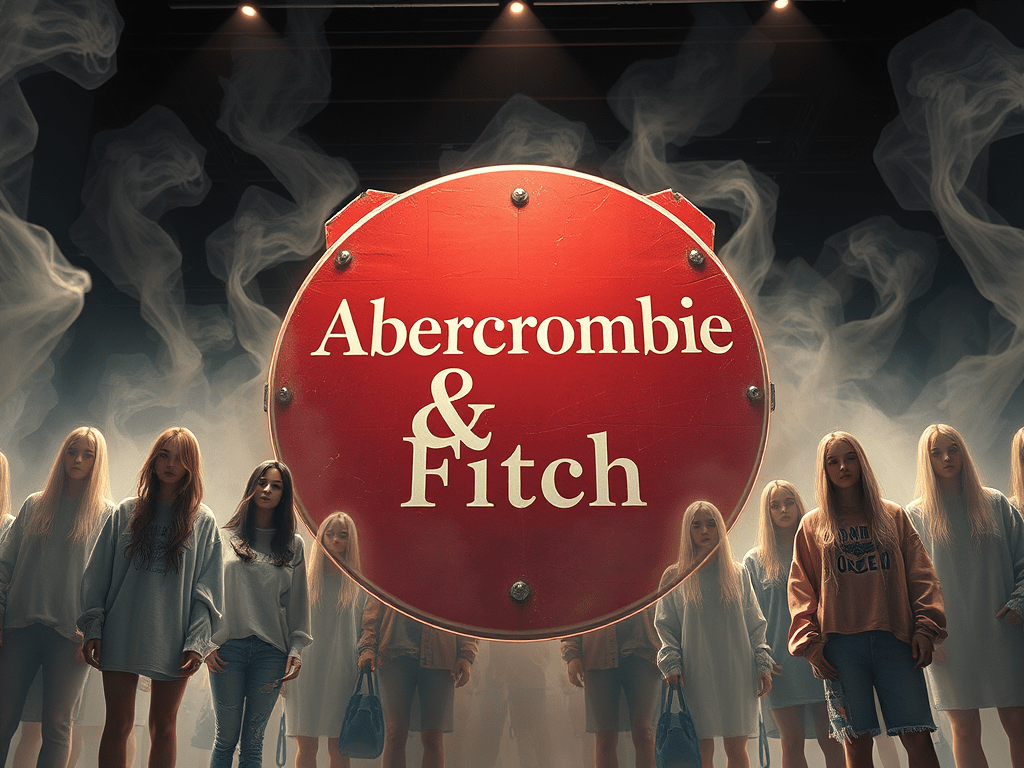
Three documentaries—White Hot: The Rise & Fall of Abercrombie & Fitch, Brandy Hellville and the Cult of Fast Fashion, and Trainwreck: The Cult of American Apparel—reveal a sobering truth: some of the most iconic youth fashion brands haven’t just sold clothes; they’ve trafficked in identity, manipulated insecurity, and run full-scale psychological cons dressed up as marketing.
These brands built empires on seductive illusions—creating tight-knit aspirational worlds where beauty, desirability, and social status were pre-packaged into a logo and sold at a premium. The catch? Entry required blind conformity to a narrow aesthetic, behavioral uniformity, and uncritical loyalty. This wasn’t fashion—it was Groupthink in skinny jeans. And behind it all pulsed the emotional engine of modern consumer culture: FOMO, the fear of being left out, unseen, unchosen.
White Hot, reviewed by Ben Kenigsberg, focuses on Abercrombie’s marketing of “aspirational frattiness”—a euphemism for white exclusivity wrapped in khaki shorts and cologne. It was a smug, muscular nostalgia trip to a sanitized, all-white upper-class fantasy where thinness, wealth, and preppy arrogance were the unspoken requirements for membership.
At the helm was CEO Mike Jeffries, a marketing savant whose obsession with aesthetic purity bordered on cultic. Under his reign, the company embraced racist T-shirts, discriminatory hiring practices, and a toxic definition of “cool.” His executive team mirrored his vision so fully they might as well have been in a bunker, smiling and nodding as the walls caught fire. Groupthink didn’t just enable the brand’s rise—it ensured its blindness to its own downfall.
Why revisit Abercrombie now? Because its story is a pre-Instagram case study in the mechanics of cult marketing: how insecurity is mined, branded, and sold back to consumers at 400% markup. My students in the 90s already saw through the ruse—complaining the shirts fell apart in the armpits within a week. What mattered wasn’t the clothing but the illusion of status sewn into every threadbare seam.
Ultimately, White Hot offers a rare glimpse of justice: a cool brand undone by its own arrogance, its aesthetic no longer aspirational but pitiful. The Abercrombie collapse isn’t just a business story—it’s a warning. When branding becomes religion and coolness becomes a weapon, consumers become disciples in a theology of self-erasure.
 Cinemorphosis
Leave a comment