Category: Health and Fitness

  • Letting Go of the Bro Code

    Letting Go of the Bro Code

    My friend Lee retired at sixty-one, fled the tech industry, and landed in Santa Fe like a man stepping out of a chrysalis. The move gave him what he said his spirit had been begging for: a clean reinvention. These days he volunteers as a rescue worker at the local ski resort—hauling people out of trouble, useful again, awake in his body.

    My own retirement is eighteen months away, and I feel the same hunger for reinvention—but without the romance of relocation. My wife and kids aren’t uprooting, and neither am I. So if I’m going to change, the terrain has to be internal. I don’t need a new zip code; I need a new relationship with myself.

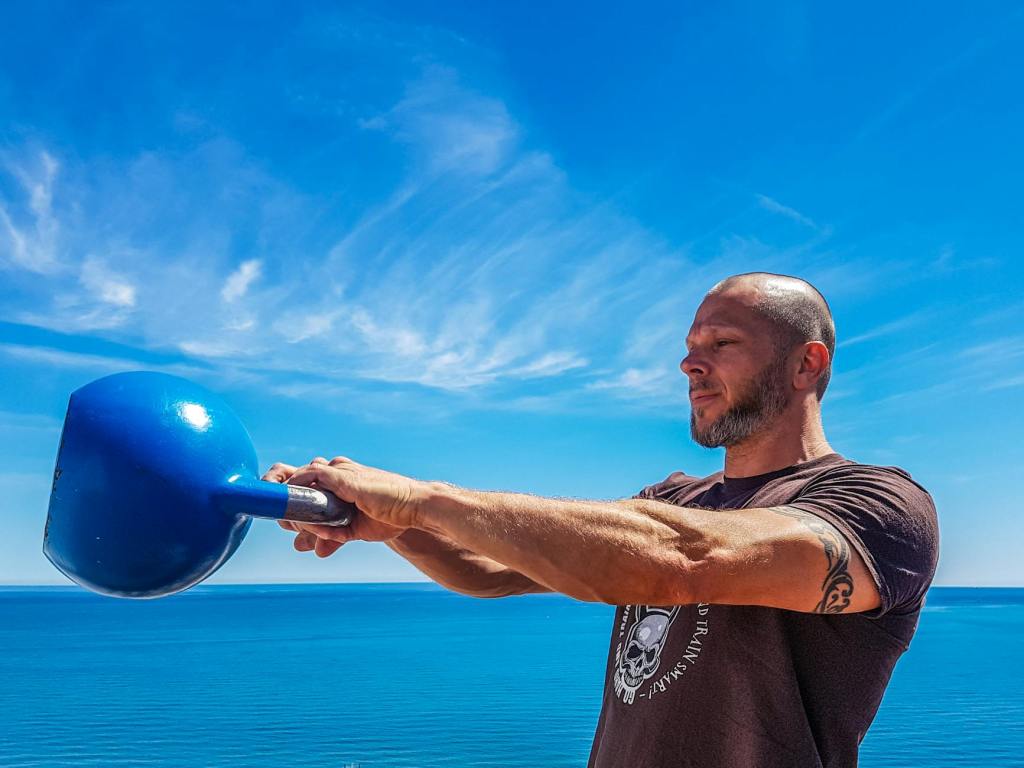
    Some of this craving is spiritual. Some of it is brutally practical. For the past five months I’ve been rehabbing a torn rotator cuff marinated in arthritis. I tried to negotiate with my kettlebell workouts—adjusting angles, trimming volume, pretending moderation would save me. It half-worked. What didn’t improve was the resentment. In fact, it metastasized.

    I know exactly how I got here. I overdid kettlebells—four days in a row, again and again—until my shoulder finally filed a formal complaint. Now the bells feel less like tools and more like accusations. I still want to train five or six days a week, but the thought of picking them up fills me with a low-grade fury. When resentment becomes chronic, it’s information. Ignoring it is how you end up injured and stubbornly proud about it.

    What I keep circling back to is yoga—specifically my mid-2000s era, when power yoga was my religion. Back when Bryan Kest and Rodney Yee videos taught me that yoga could be punishing, sweaty, and deeply satisfying. One hour. Total exhaustion. Muscles lit up, ego humbled, mind quiet. I want that again—not just the shape of it, but the mental state. I want to get lean. I want a diet that actually complements the practice: simple, semi-vegan, enjoyable. Yoga four days a week. The exercise bike on the others. Nothing heroic. Nothing destructive.

    Of course, underneath all of this is the same old human wish: character. I want a yoga lifestyle that reflects self-possession, self-discipline, and self-confidence—the real currencies of happiness. Not indulgence. Not macho theater. If I’m going to retire in the Southern California suburbs, fine. But I can’t be the retired guy slowly maiming himself in the garage, clinging to an identity that no longer serves him.

    Yoga never hurt me. Not once. It always left me clearer, calmer, and stronger in ways that mattered. As a lifetime weightlifter, I’m realizing I need to let go of the Bro-Coding and Bro-Signaling that once fed my pride. What is a real man, anyway? It isn’t someone chasing pump and punishment while overeating and limping through life. It’s someone fit, injury-free, and genuinely disciplined.

    Lee rescues skiers. I admire that. But before I can rescue anyone—before I can reinvent anything—I have to rescue myself first.

  • Evil With a Vacant Face: The Turpin Case and the Myth That Mental Illness Explains Everything

    Evil With a Vacant Face: The Turpin Case and the Myth That Mental Illness Explains Everything

    I remembered the Turpin case the way most people do: as a headline too grotesque to metabolize. Thirteen siblings chained, starved, beaten, and imprisoned by their parents until one of them finally escaped in 2018 and called the police. I hadn’t revisited the story until I saw an update, The Turpins: A New House of Horrors. In it, Diane Sawyer interviews three of the children who survived their parents’ private dungeon—only to be handed over by social services to another household that abused them all over again. The people who adopted them have since been convicted. The rescue, it turns out, was only a handoff to a new nightmare.

    What struck me immediately was how eerily gothic the parents appear, as if the story had summoned its own visual shorthand for evil. The mother, Louise Turpin, radiates menace—her face tight with cruelty and mental fracture. The father, David Turpin, looks equally arrested, a sixty-year-old man wearing the shaggy hair and slack affect of a disturbed adolescent. Both faces are blank, glum, almost vacant. And yet once you hear what they did—years of systematic starvation, torture, and control—you understand that the vacancy is not emptiness but concealment. Behind those dead expressions worked a tireless, inventive cruelty.

    They are plainly evil people. They also appear mentally ill. Those two facts do not cancel each other out. Narcissism, for instance, is a recognized pathology, but it often carries a moral charge—a pleasure in domination, a delight in harm. Watching the Turpin parents, I was reminded of M. Scott Peck’s The People of the Lie, a book I read decades ago that argued precisely this point: that evil can wear the mask of sickness, and sickness can provide cover for evil. Louise and David Turpin fit that category with chilling precision—malignant narcissists cloaked in religious piety, manipulating their children while feeding off their suffering.

    What makes Sawyer’s interview watchable, even bearable, is what comes after. The children speak about therapy, recovery, work, and the slow construction of a life that does not revolve around fear. Sawyer notes that they “won the hearts of the country,” and it’s true. They are lucid, self-possessed, and deeply sympathetic. You don’t pity them so much as root for them.

    The clearest light in the story is their sanity—and how visibly it flows from their love for one another. These siblings endured the same menace together. They shared it. They protected one another where they could, and afterward, that bond became ballast. They are not just survivors; they are witnesses for one another. Watching them, you come away with a rare conviction that sounds sentimental until you see it embodied: that love, stubborn and mutual, can outlast even prolonged, institutionalized evil. In this case, it appears to have done exactly that.

  • Why Your Watch Doesn’t Make You Happy Anymore

    Why Your Watch Doesn’t Make You Happy Anymore

    To understand the madness of the modern watch addict, you’d do well to consult Dopamine Nation by Stanford psychiatrist Anna Lembke, a book that should be shelved somewhere between philosophy, neuroscience, and quiet screaming. Her central thesis? In an age of relentless indulgence, the line between pleasure and pain is not only blurry—it’s the same neurological pathway. You’re not escaping pain with your latest acquisition. You’re feeding it.

    “The smartphone,” she writes, “is the modern-day hypodermic needle.” And the drug? Dopamine—delivered in neat little parcels: TikToks, tweets, memes, and yes, wrist shots of watches you don’t own (yet). If you haven’t met your poison of choice, don’t worry. It’s just a click away.

    Lembke makes the uncomfortable truth clear: The more dopamine hits we seek, the more our brain adapts by reducing our baseline pleasure response. What once thrilled you—your grail watch, your Rolex Explorer, your Seiko with the Wabi-Sabi patina—now barely registers. You’re not chasing pleasure anymore. You’re just trying to feel something.

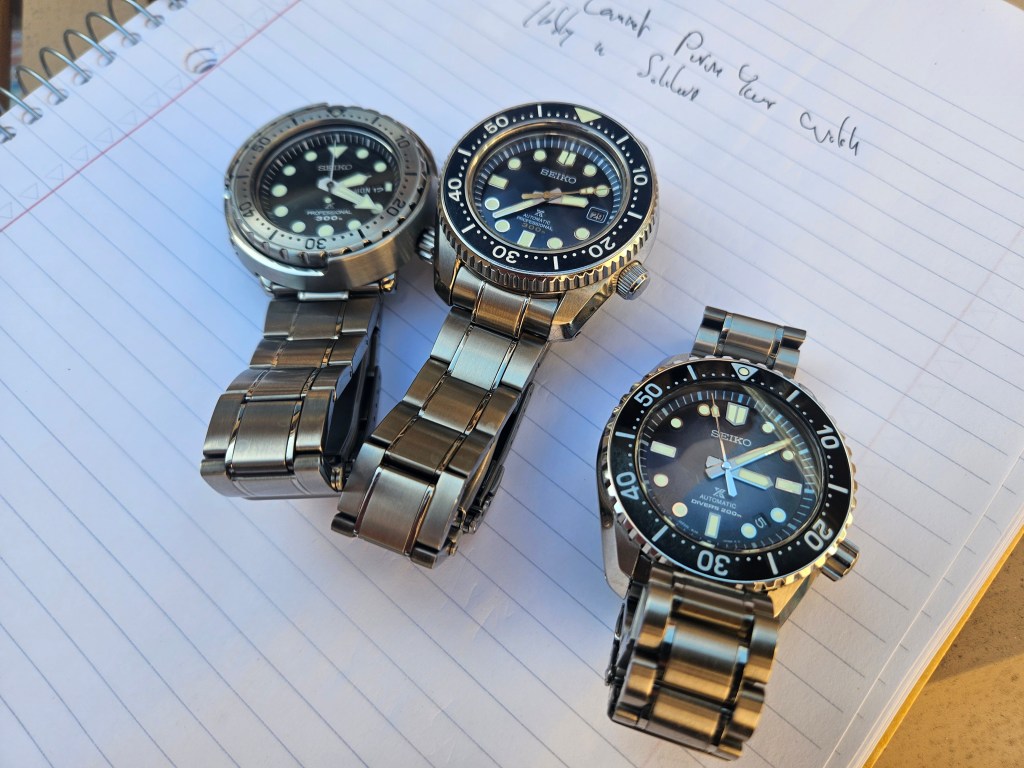
    Watch addicts, of course, understand this intimately. The pursuit of horological perfection starts out innocent enough: a G-Shock here, a vintage diver there. But soon you’re tumbling into the abyss of boutique limited editions and message board enablement, haunted by the need to stay relevant. Because here’s the twist: It’s not just about the watches. It’s about being seen. You post, you review, you flex because if you stop, you vanish. No new watches = no new content = digital extinction.

    And extinction, in a social-media world, feels like death.

    Lembke warns us that addiction thrives in secrecy, in the exhausting double life. The watch addict may present as a tasteful minimalist to family and friends, while secretly rotating 19 watches, five straps deep, waiting for the next “drop.” The addiction is fed by access, and we live in an access economy. New releases are no longer annual events—they’re hourly temptations. The vortex is bottomless. The supply creates the demand.

    Even worse, modern society normalizes this behavior. Everyone is scrolling. Everyone is upgrading. Our addiction to novelty is passed off as taste. Our frenzied consumption masquerades as identity. Lembke borrows from Philip Rieff to explain the deeper shift: “Religious man was born to be saved; psychological man is born to be pleased.” The modern watch collector doesn’t believe in salvation. He believes in configuration.

    But here’s the cruel irony: The more you seek to be pleased, the less capable you are of being pleased. In Lembke’s words: “Hedonism, the pursuit of pleasure for its own sake, leads to anhedonia—the inability to enjoy pleasure of any kind.”

    You can understand the watch addict’s feeble quest when you look at the Horological Dopamine Loop–the self-reinforcing cycle in which acquisition, posting, validation, and anticipation replace enjoyment. The watch no longer delivers pleasure; it merely resets the craving for the next hit.

    What’s the solution? A dopamine fast. Lembke prescribes it like a bitter medicine: Remove the source. Reset the brain. Let it reestablish homeostasis. For the watch addict, this means one thing: a watch fast.

    And yes—it’s brutal. I’ve been a watch obsessive for over twenty years. My longest fast? Six months. And I nearly went feral. New releases tempt. Friends enable. Algorithms whisper. Strap swaps and vintage reissues beckon like sirens. Even the FedEx truck starts to look like a personal tormentor.

    So you get creative. You stash watches in the safe and “rediscover” them. You buy new straps instead of new watches. You try to redirect the compulsion toward something productive: fitness, music, sourdough, monkish austerity. Anything but another chronograph.

    But the real cure, oddly enough, may be conversation—actual human connection. At watch meet-ups, we start out discussing bezels and spring bars, but within ten minutes we’re talking about life: real estate, parenting, knee surgeries, emotional burnout, dinner recipes. We talk for hours. But barely about watches.

    The truth slips out in these moments: we want to be free. We crave community more than we crave sapphire crystals. What began as a shared obsession has become a trap, and these conversations, paradoxically, offer relief from the very addiction that brought us together.

    Imagine a bunch of watch enthusiasts at a watch meet-up and we’re talking about everything but watches. Wrap your head around that.

  • The Greatest Flex Is Self-Denial

    The Greatest Flex Is Self-Denial

    In case anyone has missed it, Bruce Springsteen is seventy-five years old and still looks like he could outrun most men half his age while singing at full volume. He has the same chiseled body that powered “Born to Run” during my junior year—the song that injected an entire generation with adolescent adrenaline and the belief that escape was always one chorus away. The mystery is not that Springsteen is still performing. The mystery is how he’s performing while appearing carved out of disciplined granite.

    The answer, it turns out, is brutal in its simplicity. Springsteen eats one meal a day. That’s it. No grazing. No late-night negotiations with the pantry. His self-control has apparently spread, too. Chris Martin of Coldplay—another famous man who could afford to eat like a Roman emperor—has sworn off dinner entirely. I find all of this deeply unsettling, not because it’s unhealthy or extreme, but because it’s practiced by people who could easily afford indulgence as a full-time lifestyle.

    That’s the real flex. Not yachts. Not villas. Not decadent excess. The most impressive display of power available to the wealthy is self-denial. These men don’t lack access. They lack excuses. Their discipline quietly points an accusatory finger at the rest of us, and unfortunately, that finger lands squarely on my plate.

    If I’m being honest—and honesty is the whole problem here—I’m indulgent when it comes to food. Portions creep. Snacks multiply. I carry about twenty pounds that no amount of kettlebells or Schwinn Airdyne heroics can fully offset. Springsteen himself has said that fitness is ninety percent diet, and I resent him for being right. You can’t out-train a refrigerator you keep reopening out of habit.

    So tonight, instead of reaching for another snack, I may watch the latest Bruce Springsteen documentary for moral reinforcement. The man who once soundtracked youthful restlessness may now be offering something rarer: a model of restraint with dignity intact. Cheers to Bruce Springsteen—patron saint of senior citizens who refuse to let dinner win.

  • How We Went from Breakfast Mascots to Political Tribes

    How We Went from Breakfast Mascots to Political Tribes

    A few nights ago, I watched Big Vape: The Rise and Fall of Juul, the four-part autopsy of a company that promised salvation from combustible cigarettes and instead managed to hijack a generation’s taste buds. Juul framed itself as a public-health crusader. What it actually built was a sleek delivery system for addiction, turbocharged by flavors engineered to lodge themselves deep in the dopamine circuitry of young brains.

    Former employees and users all pointed to the same thing: mango. Mango wasn’t just a flavor; it was an event. People didn’t vape mango casually. They marinated in it. Mango was the hook.

    Watching this, I was transported back to my own childhood and my first chemical romance: Cap’n Crunch.

    There was something about that unholy alliance of corn flour, palm oil, and brown sugar that short-circuited my will. I didn’t want moderation; I wanted saturation. My parents imposed limits, which only deepened my resolve to grow up as fast as possible so I could make my own enlightened dietary decisions—namely, Cap’n Crunch for breakfast, lunch, and dinner. I failed to notice the irony that a grown man subsisting on sugar cereal would represent not maturity but infantilization.

    Cap’n Crunch’s true genius wasn’t just sweetness. It was proliferation. The same cereal reappeared in endless costumes—Crunch Berries, Peanut Butter Crunch—each one offering the illusion of choice. King Vitamin was the most audacious iteration: Cap’n Crunch in a health halo, a masterclass in rebranding junk as virtue. Lipstick on a pig, poured into a cereal bowl.

    Then there were the mascots. Quisp the Martian. Quake the muscle-bound coal miner. As a child steeped in superhero comics and Hulk fantasies, I gravitated toward Quake. Strength. Power. Identity. I didn’t realize I was choosing a brand avatar, not a breakfast.

    Cereal companies were having a field day. We watched cartoons while eating the very product being advertised between scenes. It never occurred to us that we were being conditioned—trained to celebrate a non-nutritive food substance that dissolved teeth and rewired appetite. The Juul kids didn’t know it either. They thought they were buying into a sleek, adult lifestyle. What they were really purchasing was dependence, with a mango aftertaste.

    What troubles me now is that adults don’t seem any less susceptible.

    Today, many people consume political tribes the way we once consumed sugar cereal and flavored vapor. Politics has been repackaged as lifestyle branding—complete with slogans, merch, cosplay, and dopamine hits. The substance is thin. The stimulation is constant. Critical thinking is nowhere to be found.

    These aren’t political commitments; they’re identity snacks. Sugar rushes masquerading as convictions. Defense of one’s “views” consists of chanting talking points with the same reflexive loyalty I once reserved for Cap’n Crunch. No wonder the country feels like it’s in free fall. We haven’t grown up—we’ve just swapped mascots.

    We are a nation of adult children, hooked on political flavors the way kids were hooked on cereal and Juul users were hooked on mango. Politics has become a consumer product: addictive, polarizing, shallow, and wildly profitable. All dopamine. No nutrition.

  • My Rotator Cuff Injury Taught Me Patience and Restraint

    My Rotator Cuff Injury Taught Me Patience and Restraint

    I hesitate to say this out loud, for fear of angering whatever capricious deity oversees orthopedic recoveries, but my torn rotator cuff appears to have turned a corner.

    For the first time in five months, I’ve gone without ibuprofen. No chemical truce. No white tablets brokered between inflammation and denial. My range of motion has improved by more than sixty percent, and for two nights in a row I’ve slept without that familiar 4 a.m. arthritis ambush—just a bit of stiffness, the kind that registers as information rather than alarm.

    When discomfort does surface, I can quiet it with embarrassingly small interventions: lateral raises with a three-pound dumbbell, posterior-delt pulls using a resistance band anchored to a garage wall strut. Movements so light they feel like apologies. And yet—they work.

    Two weeks ago, an ultrasound revealed inflammatory fluid. The doctor promptly suggested the modern holy trinity: cortisone shot, MRI, and escalation. I declined all three. Why submit to a needle when the pain isn’t screaming? Why enter an MRI tube when claustrophobia turns it into a medieval punishment device? And why rush toward surgery when my rehab therapist, calm and unflappable, says I’ll heal just fine without it?

    So I stick with what got me here.

    Careful shoulder work. Kettlebell leg training. Trap shrugs. Slow, deliberate cleans. Reverse curls. Close-hand push-ups on my knees—humbling but honest. Anything that irritates the shoulder—dumbbell flyes, grand gestures, heroic nonsense—gets cut without appeal. I’ve become ruthless in the best way. No bargaining. No ego.

    Injury has a way of clarifying priorities. You don’t truly appreciate the orchestration of a whole body until one part goes rogue and holds the rest hostage. Healing teaches restraint. Progress rewards patience. And recovery, when it finally begins, feels less like triumph than like a quiet ceasefire—one you’re careful not to violate.

  • The Schwinn Airdyne and the Three Realms of Fitness

    The Schwinn Airdyne and the Three Realms of Fitness

    About fifteen years ago, the literary magazine Zyzzyva published one of my short stories, “Phittnut’s Progress.” It followed a workout addict who trained with the same manic devotion Martin Luther once applied to penance and self-flagellation. At the time, I thought I was being clever. In retrospect, I was being autobiographical.

    I’ve long understood exercise as a spiritual journey—less Peloton, more Dante. Every workout is a descent, an ascent, or, on rare days, a brief glimpse of paradise. I grasped this intuitively long before I had any formal exposure to theology.

    When I was about seven, I watched a 1960s TV show in which a man in a gorilla suit terrorized castaways on a nameless island. The production values were laughable; the fear was not. That night, the gorilla followed me to my room. I lay in bed convinced the beast was beneath my mattress, growling, reaching upward, eager to drag me into its lair.

    Sleep was impossible until I deployed my first metaphysical escape hatch. I imagined myself drifting on a raft along a calm river, safely beyond the monster’s reach. Above me stood a benevolent woman—a hybrid of the Statue of Liberty and Dante’s Beatrice—watching over my passage. Ahead was a luminous haze, the same gauzy heaven Fred Gwynne’s Patience the Guardian Angel inhabits in the 1969 film The Littlest Angel. Only then did peace return.

    This architecture still governs my workouts.

    When I’m out of shape, I’m back in the Monster’s Lair. When conditioning improves, I find myself floating along Beatrice’s River. And when I hit my goal—when effort dissolves into rhythm—I enter the Glory of Patience.

    My Schwinn Airdyne is the portal between these realms.

    Six months ago, my ambition was modest: 600 calories in 54 minutes. Respectable. Enough to keep the gorilla at bay. As fitness returned, so did ambition. A month ago, I raised the standard. To remain outside the inferno, I now needed 700 calories in roughly 55 minutes.

    Then reality intervened.

    Four days ago, after brutalizing my body with an ill-advised plumbing project, I plunged straight into the pit. Two days later, I slogged for 56 minutes and scraped together a humiliating 500 calories. Full inferno. The simian breathed hotly.

    Today, I clawed my way back to 603 calories in 54 minutes. Not glorious. Not close to the 810 calories I burned in 61 minutes six days ago. But it’s movement in the right direction. The river is visible again. The monster’s reach falls short.

    For now, that’s enough.

  • Overthinking Puts You in the Way of Enjoying Your Watch Hobby

    Overthinking Puts You in the Way of Enjoying Your Watch Hobby

    I’m trying not to get in the way of enjoying my watch hobby. Let me restate that, because it sounds absurd even as I say it: I’m attempting to stop sabotaging my own pleasure in a hobby I genuinely love. I’m trying to step aside so I can simply look at a watch and enjoy it like a normal human being.

    What’s the obstruction?

    Overthinking.

    Yes, I’m addicted to watches—but that’s a minor vice compared to my real dependency. I’m addicted to thinking about thinking. Overthinking is my true Grail, and it’s always in stock. The more I indulge it, the darker and more pessimistic my inner monologue becomes. I don’t pretend to have a cure for something that has been with me my entire life. I do, however, recognize the pattern.

    This goes back a long way.

    In 1967, I was five years old and anxious about lunch. When was it coming? Why wasn’t it here yet? My grandmother looked at me and said, “Jeff, you worry too much.” The moment she said it, a switch flipped. I wasn’t comforted. I was horrified. She was right. I did worry too much. And now I had something new to worry about: the fact that I worried too much.

    Congratulations, kid. You’ve unlocked the meta-anxiety level.

    I do the same thing with watches. I overthink my overthinking. I analyze my tendency to analyze. Then I wonder if that analysis itself is the problem. Before long, the joy drains out of something that should be simple: wearing a watch.

    Do I have a solution? Not really.

    What I do have is a strategy borrowed from a therapist I saw as a neurotic college student in the 1980s. His advice was disarmingly calm: when negative thoughts appear, don’t fight them. Don’t suppress them. Just notice them. Observe them as if they were weather passing through. No judgment. No panic. No dramatic counteroffensive.

    So that’s the plan. Observation without self-flagellation.

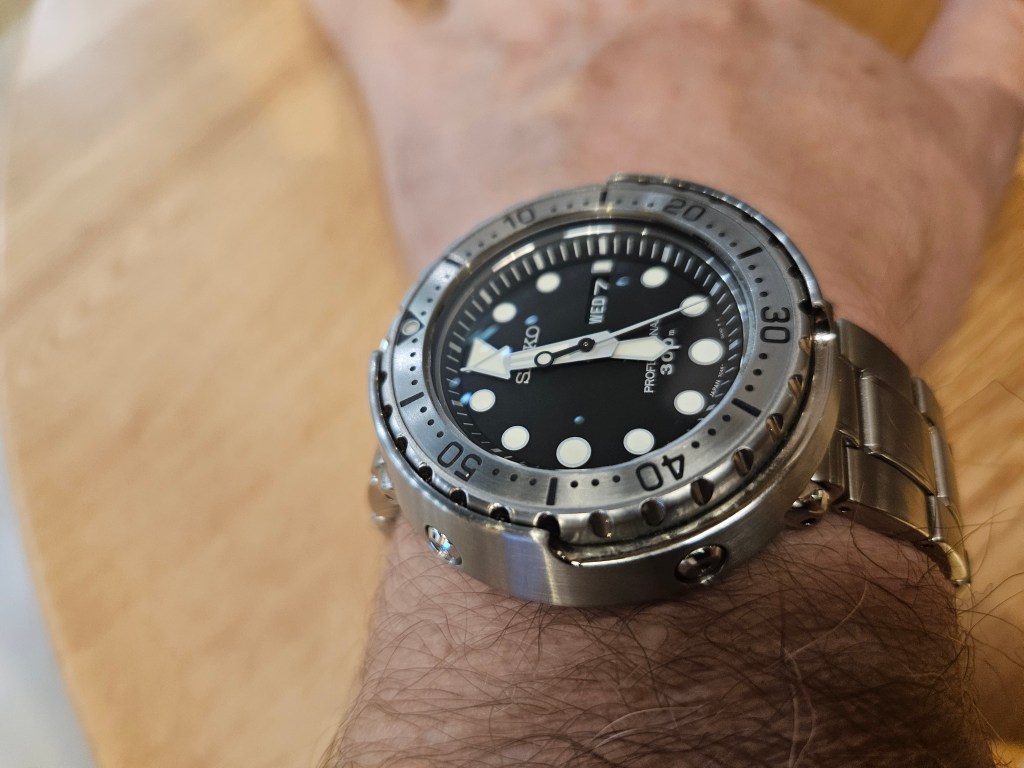
    This morning, for example, I strapped on the mighty Seiko Tuna SBBN049—on a bracelet, no less—and immediately my brain went to work. Is this watch too big? Too bold? Will I still be wearing a Tuna in my eighties? Will octogenarian me look ridiculous?

    The thoughts were stupid. They were also funny. And—most importantly—irrelevant. Rather than scolding myself, I watched the thoughts float by, labeled them mental debris, swept them out, and got on with my day.

    My oatmeal was excellent.
    My coffee was perfect.
    The Tuna looks fine on the wrist.

    Sometimes that’s enough.

  • The Hot Take Is the Chronic Cough of Something Gone Wrong

    The Hot Take Is the Chronic Cough of Something Gone Wrong

    We live in a Hot Take culture, and on balance, hot takes do more harm than good.

    For a decade, I feasted on them. Back when it was still called Twitter, my days were seasoned with sharp one-liners, instant judgments, and rhetorical mic drops. It felt bracing at first—intellectual espresso shots delivered in 280 characters. But over time, the feed stopped feeling like conversation and started feeling like a room full of people shouting clever insults at a fire.

    About a year ago, I deleted my account. By then, I barely recognized the people I once followed. Everything had gone shrill. Bombast replaced thought. Even the impressive hot takes—clever, ruthless, beautifully phrased—eventually blurred into something anesthetizing. A constant buzz that left me dull rather than informed.

    I didn’t quit social media entirely. What I actually want is boring, old-fashioned breaking news. Tell me what happened. Tell me where. Tell me when. I don’t need a verdict within thirty seconds. So now I drift through places like Threads, mostly lurking. Many of the smart people I used to follow migrated there. Some still do what they’ve always done: post headlines and context. Others can’t resist the gravitational pull of commentary. News first, hot take immediately after. Their allies cheer them on inside familiar silos, and the machine rewards escalation.

    To be fair, not everyone posting is chasing dopamine. Some journalists are doing real work. They have massive audiences and feel a genuine obligation to interpret chaos in real time. They live in a crucible of praise and abuse, applause and outrage. That kind of constant psychic weather can’t be healthy, but the motive is understandable—meaningful engagement. If this were a pre-digital era, they’d still be doing something similar, just with deadlines instead of feeds. Slower. Quieter. Possibly saner.

    But then there’s another species entirely: the professional Hot Taker.

    This person has mastered the form. Their posts are short, sharp, structurally elegant. A good hot take is witty, memorable, and instantly legible. It lands. It spreads. It racks up likes and reposts like a slot machine hitting cherries. Success is measurable, public, addictive.

    And that’s the trap.

    When identity and self-worth become tethered to engagement metrics, the self gets commodified. Everything becomes raw material for the next take. Nuance is a liability. Hesitation is death. The hot take demands boldness, outrage, and certainty—even when certainty is fraudulent.

    At that point, the Hot Taker is no longer responding to the world; they are farming it.

    I’ve watched thoughtful, decent people slide into this role. At first, their posts are useful. Then they overshare. Then they pick fights they don’t need to fight. Eventually, their online life becomes a series of skirmishes that feel exhausting even to sympathetic observers. They can’t stop—not because they’re evil, but because the machine has trained them well.

    So yes, we live in the Age of the Hot Take, where people measure their purpose by their ability to generate applause from the faithful. Hot takes don’t convert anyone. They delight the choir and enrage the opposition. Polarization intensifies. Nothing moves.

    Is it unfair to call this a disease? I don’t think so.

    First, there’s the hijack. The belief that constant expression equals relevance, that relevance equals worth. It’s a delusion reinforced by numbers. Likes don’t satisfy; they sharpen hunger.

    Then there are the consumers. By liking and reposting, they feel they’re participating in history, bending reality toward justice. In practice, they’re mostly helping tribes harden their borders. Everyone believes they’re weaponizing truth. No one notices the epistemic ground eroding beneath them.

    When COVID hit, I assumed the crisis would force clarity. Instead, it deepened the divide. Now measles—a disease we already solved—is making a comeback. Science, once the shared floor, has become another battlefield. If pandemics and preventable deaths can’t bring us together, hot takes certainly won’t.

    You can fire off the most righteous, viral condemnation imaginable. Measles will still spread.

    So what should we do instead?

    The answer isn’t attractive. Reality hasn’t hit hard enough yet. Historically, people abandon fantasy only when consequences become unavoidable. Until then, we chatter. We posture. We perform. Hot takes aren’t solutions. They’re symptoms—the chronic cough that tells you something deeper is wrong.

  • The $80 Radio That Beat the Big Boys

    The $80 Radio That Beat the Big Boys

    Five mornings a week, I work out in my garage—kettlebells clanging, yoga mat unrolled, joints negotiating a ceasefire. The soundtrack is Larry Mantle on LAist 89.3 FM, broadcasting from Pasadena. This matters because Torrance is not Pasadena, and 89.3 is a notoriously fragile signal here. It fades, ghosts, sulks. Catching it cleanly is less a matter of tuning than of faith.

    Then there’s the noise. Torrance mornings are an industrial symphony: garbage trucks reversing, leaf blowers screaming like jet engines, lawnmowers revving, cars tearing past as if late for something existential. Any garage radio that can’t project authority is immediately demoted to paperweight.

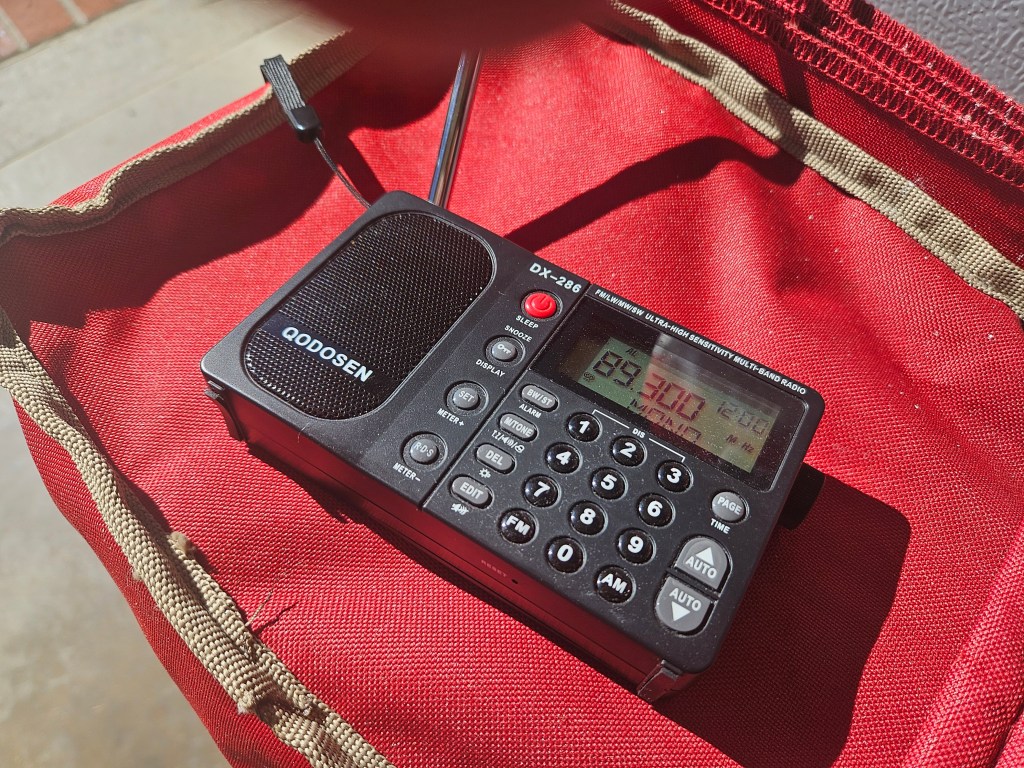
    I briefly considered going big—dropping $300 on a Tecsun S-8800 field radio, a machine that looks like it should come with a government-issued lanyard. But after cycling a parade of smaller radios through the garage, I landed—almost sheepishly—on the Qodosen DX-286. And it has been an ambush.

    On FM, the Qodosen is a brute. It grabs 89.3 at full strength and refuses to let go. Its 3-watt speaker is loud without being cruel, present without being shrill. Placed in just the right corner of the garage, away from interference, it becomes a small, defiant monument to good engineering. Unfettered, it sings.

    The most embarrassing part is that I once returned it.

    I didn’t trust it. An $80 radio performing this well felt like a trick. Too good to be true. I convinced myself it was a short-lived overachiever—high performance, early death. So I sent it back and went crawling to my more expensive radios: the Tecsun PL-660, the PL-680. Fine machines. Respectable. And yet, one by one, they lost the FM battle and the speaker war.

    The absence of the Qodosen grew louder than the radios I owned.

    Eight months ago, I rebought it, tail between my legs. It has been my garage companion ever since. Morning after morning, it cuts through the din and delivers Larry Mantle like clockwork. Kettlebells swing. Downward dogs are held. The signal holds.

    Sometimes the best gear isn’t the one with the most gravitas or the highest price tag. Sometimes it’s the small, stubborn box you didn’t believe in—until it refused to be ignored.